


































In questo articolo
Wool: a unique fiber with endless uses and benefits
When wearing a sweater or coat, we rarely consider that the material it is made from has ancient origins. In fact, wool is one of the fibers known and used by humans since the earliest historical civilizations and is still employed today to produce clothing, home furnishings, and packaging. This is thanks to its unique properties and qualities: let’s explore them together in this article.
Brief history and market
Wool is a natural fiber obtained from the hair of certain animals. In most cases, this is the fleece of sheep, which is sheared and processed to become fabric. Still widespread worldwide today, it was already known in ancient times: it seems that the Sumerians, as early as 5000 BC, used this material to make garments; however, it was the Babylonians who discovered and developed its processing, albeit at a rudimentary stage.
The earliest evidence of wool in Europe dates back to 1500 BC, when textile workshops spread in Greece and southern Italy, primarily run by women. In classical times, Taranto stood out for its high-quality wool.
During the Middle Ages, wool production shifted from a local to an international scale. From this point forward, trade intensified, with specialized centers focused on raw material production while others concentrated solely on processing. Renaissance England, for example, was one of the main exporters of raw wool and woolen cloth, purchased by other countries—such as Medici Florence, home to the powerful Arte della Lana guild—to be transformed.
This situation consolidated and continued, with some changes, until the 19th-century Industrial Revolution, which introduced mechanized production methods capable of speeding up the entire process.
The wool market experienced a crisis around the mid-20th century, when synthetic fibers, more practical and less expensive, began to establish themselves. However, this textile fiber was never truly abandoned and still represents one of the most common materials in the fashion industry and beyond. Today, the leading wool producers worldwide are Australia, New Zealand, China, and the United States.
Characteristics and properties of wool
Wool offers numerous qualities that make it ideal for various textile applications. Key characteristics include:
- Thermal insulation: due to its unique configuration, wool fibers trap air, protecting the body from cold;
- Moisture absorption: contrary to what one might expect, wool is also excellent during summer as it absorbs moisture without feeling wet;
- Elasticity: this property greatly reduces the risk of creases and wrinkles; wool resists deformation well;
- Fire resistance: wool is almost entirely flame retardant, burning at higher temperatures than other fibers and, unlike synthetics, producing less toxic fumes;
- Odor resistance, antibacterial and stain resistance: the natural antimicrobial and antibacterial properties inhibit bad odors and provide good stain resistance.
Versatile, comfortable, and durable, wool can be processed in many ways and lends itself to numerous uses: it can be worn directly against the skin or used to produce accessories and various objects, including packaging.
Wool processing: main stages of the production cycle
To obtain the fabric, wool undergoes a fairly long process involving several stages: let’s look at the main ones. It starts with shearing, which is the removal of the animal's fleece, carried out at specific times of the year (when the fleece is thicker, usually in spring/summer).
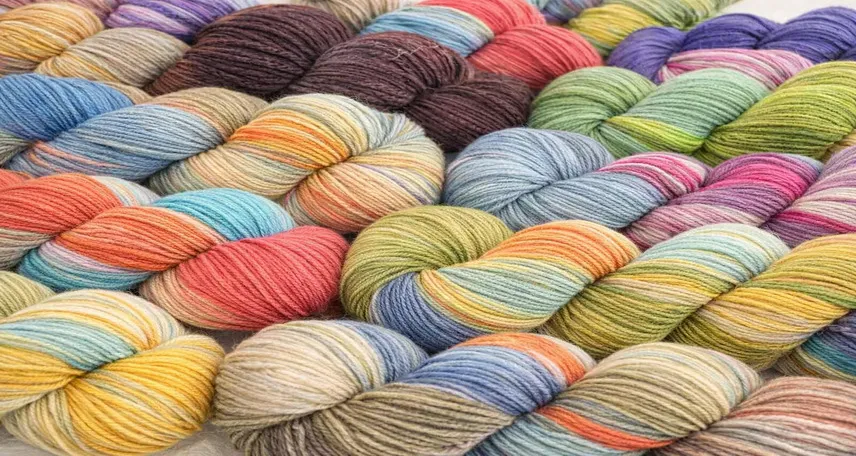
The second step is sorting: wool is selected based on quality, color, texture, and fiber length and allocated to higher or lower-end products. After these preliminary stages come washing and carding: washing removes vegetal and organic residues; carding is a mechanical process essential to clean the wool of any remaining impurities and align the fibers by untangling knots.
After ironing, refinement follows, then spinning. Spinning varies depending on the intended final product: combed spinning, for example, is especially suitable for knitwear; carded spinning, which provides volume and softness, is mostly used for knitwear and home textiles; semi-combed spinning is a middle ground that yields a coarser yarn, often used for rugs.
Finally, weaving is carried out using looms that interlace multiple yarns (weft and warp).
Types of wool
Wool is not all the same and varies according to the animal source, fiber diameter, and processing. To simplify, here are the better-known types:
- Angora wool: obtained from Angora rabbits, native to Turkey. The yarn is very fine and soft and therefore used for luxury garments, often blended with other yarns to enhance durability. However, the production methods, which are not always ethical, make it somewhat controversial;
- Mohair: derived from the Angora goat. Strong and elastic, it is also very comfortable and used to create warm garments that resist felting;
- Merino wool: comes from Merino sheep, widespread in Australia. Lightweight yet very warm, it is perfect for producing both casual wear and high fashion pieces;
- Cashmere: produced from the coat of a Tibetan goat, primarily raised in India, Turkey, Iran, Mongolia, and Russia. Soft and glossy, it allows the creation of very pleasant garments with a chic touch;
- Alpaca wool: from the South American camelids, it has excellent insulating properties and is therefore used for clothing items like coats and similar;
- Shetland wool: named after the sheep from the eponymous islands off Scotland, it offers a natural, pleasant warmth and is often used for outdoor garments;
- Vicuña wool: obtained from the camelid living in the Andes, producing a very fine and delicate undercoat. This yields a highly prized wool, left in its natural color because it is incompatible with chemical treatments.
Additionally, there is Shatoosh, an extremely precious wool now banned because the Tibetan antelope (Chiru) from which it comes is endangered.
Uses of wool: clothing and beyond
As seen, wool is particularly valued for making clothing: t-shirts, sweaters, as well as trousers, hats, and coats leverage this material and its unique properties. Designers and brands have also seized the opportunity to create clutches, bags, and footwear, as well as home coverings, cushions, throws, and bedding.
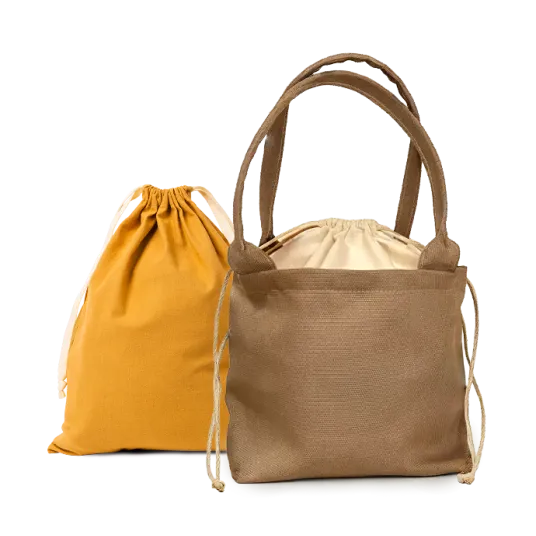
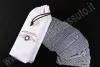
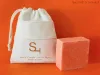
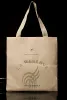
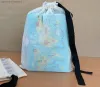
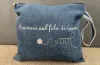
Wool processing can produce fabrics of varying softness and durability, such as boiled wool. Obtained through a felting process of carded wool that hardens the fibers, it lends itself to further applications, including packaging. This is an optimal solution for custom fabric bags designed for special products such as cosmetic bottles and delicate accessories like belts or unique pieces.
Is wool sustainable?
The sustainability of the textile sector is an open and complex issue raising many concerns and doubts. Therefore, many producers, driven also by growing consumer awareness, are turning toward eco-friendly materials.
Wool, generally speaking, is an ecological material: it is a natural fiber and its processing does not have a high environmental impact, except during washing (which varies according to the amount of water and substances used). Wool residues also biodegrade in the environment.
Natural, yes, but not always ethical: shearing is often conducted with practices that are disrespectful of animals. One of the most harmful procedures is known as mulesing, involving the removal of entire strips of live sheep skin without anesthesia to prevent possible damage to the fleece. This has led to the creation of specific labels (mulesing-free and cruelty-free, for example) and certifications that attest to responsible wool production.