













In questo articolo
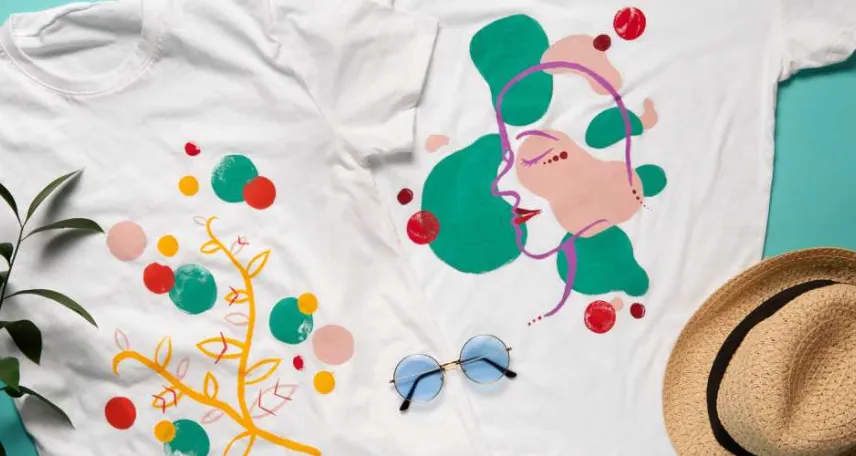
When discussing fabric packaging, there are many factors to consider. The first is certainly the material: natural or synthetic, virgin or recycled. Then comes any aesthetic or functional finishing. The shape is also important, as it depends on the contents and the style of the packaging. Last but not least is graphic customization. Fabric can host decorations and images, or logos and various types of writing. To create these, a printing technique is necessary. There are several options: from hot foil stamping, to screen printing, to sublimation or digital printing. Today we want to focus on DTF printing (Direct-to-Film), a type of hot foil stamping that allows the customization of fabrics with highly complex designs without losing vibrancy or quality.
What DTF printing is and how it works
DTF printing gets its name from the process used to transfer images from a film (the transfer film) onto fabric. To simplify, the steps can be described as follows:
- the initial design (a logo, an illustration, or another type of image) is printed onto a transparent glossy sheet through a dedicated printer that uses special inks and solvents;
- the film with the design is then placed on the fabric or the garment, laid flat;
- both are then passed through a heat press which, using heat and pressure, applies the design onto the fabric;
- when the garment or fabric has cooled, the film used for the transfer can be removed.
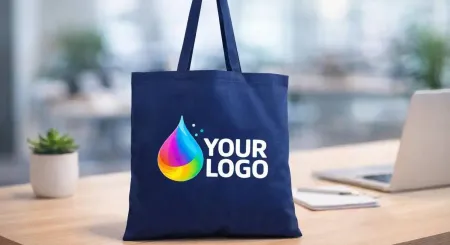
DTF printing adapts well to various types of items, including those traditionally more challenging to treat, such as caps, jackets, bags, and backpacks. Of course, it is also suitable for fabric packaging. But what advantages does it offer, and why choose it over other techniques?
What are the advantages of DTF printing?
Generally, DTF printing ensures excellent results, both in terms of design fidelity and durability. But this is not its only positive aspect.
Material versatility
DTF printing supports a variety of materials, from natural fibers like cotton to polyester, denim, and leather. This makes it one of the most versatile and widely used techniques, capable of reliably and satisfactorily meeting diverse customization needs. Furthermore, the print is thin and lightweight, so it does not weigh down the material or affect its tactile quality.
Print quality and color reproduction
The technology behind DTF printing has recently evolved and now achieves truly excellent results. Thanks to its intrinsic elasticity, the print appears sharp and uniform, without cracks or distortions. The design lasts long and does not fade even after several washes, although some defects may occur after prolonged exposure to hot water.
What stands out most, however, is the color vibrancy: DTF printing suits complex and elaborate designs with very rich color palettes, which are faithfully reproduced on the fabric.
Production flexibility
This method is advantageous not only from a quality perspective but also practically. The production requires a relatively low initial investment and minimizes waste, with ecological benefits as well. Moreover, it can be used for both large-scale production, small batches, or even on-demand printing: an ideal solution for smaller retail stores and e-commerce.
Speed
Speed is another key advantage of this technology. Compared to the recent past, machinery has greatly improved, and today production times are quite fast. Unlike other techniques, pre-treatment of fabrics before printing is not necessary, and the films with the design can be prepared in advance and then applied with heat within minutes.
How DTF differs from other printing techniques
As mentioned at the beginning, this is just one of the available hot foil stamping processes, and there are many alternatives. How do you decide which is right? It all depends on the desired effect, the material, and the target item. There is no absolute best method, but various solutions that may or may not be suitable for the specific case. Let’s then look at the main differences between DTF and other techniques.
DTF or DTG printing? Main differences
DTG stands for Direct-to-Garment. Unlike DTF, which transfers via film, DTG works directly on the fabric. After processing the file, the DTG printer applies the image onto the fabric using special inks: somewhat like a common home printer, but instead of paper, the substrate is fabric. To ensure good adhesion, it is recommended to pre-treat the garment with a specific primer. At the end of the process, the print must be fixed by passing the item through a heat press or oven, in a step known as polymerization.
It is possible to create any type of graphic or text with both methods, but the result will be slightly different. DTF printing guarantees vivid and bright colors, but photographic quality is better with DTG. Therefore, for detailed flat vector graphics, the former is preferred; for photographs or more realistic images, the latter is better. Fabrics tend to absorb DTG inks, producing a softer, more “pastel” effect. There is no concern about cracks or defects as long as washing is done inside out and at a maximum of 30°.
Both techniques handle high or low production volumes well, adapting to any needs including print on demand.
DTF, screen printing, and sublimation compared
What about other techniques, like screen printing and sublimation printing? Each has distinct characteristics worth considering to determine the most suitable method for the task.
Specifically:
- Screen printing consists of transferring color from a mesh screen to the fabric. It is an ancient method now industrialized, fast and relatively economical. It can be used on various fabrics, from cotton to eco-leather, and guarantees vivid colors and precise prints. However, it is not recommended for very fine decorations or text because the screen-to-fabric transfer can cause printing imprecision;
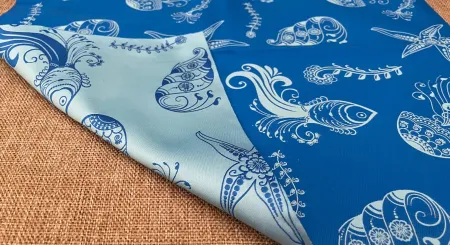
- Sublimation printing takes place by transferring color from a special paper onto fabric using an industrial heat press. The colors penetrate the fabric’s weave, reproducing the design on the desired material. Velvet, silk, jersey, as well as lycra and cotton blends respond well to sublimation printing, provided they are white (in various warm shades): this method does not work with white colors but can reproduce the full range of dark colors over the entire surface, thereby changing the original fabric’s hue.
Sacchetti di Tessuto for your customized fabric packaging
As we have seen, each technique has specific pros and cons that are good to understand before starting a production process. At Sacchetti di Tessuto, we are experts not only in raw materials, selected according to stringent traceability, quality, and sustainability criteria, but also in printing and customization methods. For this reason, we carefully and attentively oversee every project, advising our clients on the various customization possibilities for their packaging.
Browse our catalog to see all the available options and contact us for a consultation and a tailored quote for your new custom printed fabric packaging!