




















In questo articolo
Understanding the characteristics and origin of fabrics is a fascinating journey that often takes us far back in time and across places and eras that—even years later—still influence our present. This is the case with ottoman fabric: ancient yet very modern, it is still used today for garments and high-end clothing. Let us explore its history and distinctive qualities together.
Historical Origins of Ottoman Fabric
Ottoman fabric derives its name from the Ottoman Empire—which corresponds to present-day Turkey—founded by Osman I. Here, between the 15th and 16th centuries, a flourishing textile production developed: the manufactories of Bursa and Istanbul produced luxury silks, velvets, and figured fabrics for the court, city elites, and European and Asian markets.
With its distinctive ribbed structure and typical decorative patterns, ottoman fabric established itself as one of the most sophisticated forms of Turkish craftsmanship and, alongside ceramics and painting, remains a subject of study and collection worldwide (consider that one of the oldest fragments of ottoman fabric is preserved at the famous V&A Museum in London).
Main Characteristics
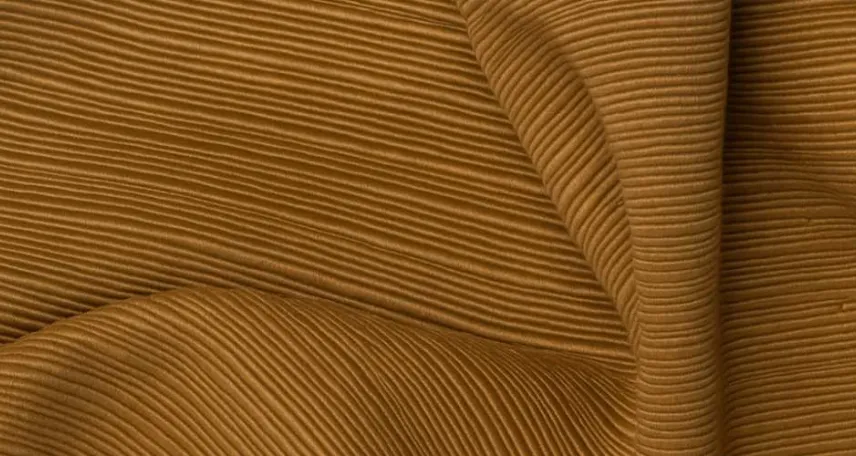
As mentioned, ottoman fabric is a medium-weight textile belonging to the category of corded or ribbed fabrics. Its main feature lies in the ribs, called cannette, which are very pronounced and run across the full width of the fabric. These ribs appear as raised lines created by thicker weft yarns (for woven fabrics) or specific knit patterns (for ottoman jersey). They can vary in thickness and the spacing between ribs can range from 3 up to 10 per centimeter.
Those unfamiliar with it may easily mistake ottoman fabric for corduroy, but they are different materials. Ottoman fabric has a smooth ribbed surface formed solely by the interlacing of yarns. Corduroy, by contrast, is a piled fabric whose ribs consist of small cut velour cords separated by channels. The tactile effect and properties differ too: while ottoman fabric has a generally firm and structured hand suitable for formal wear or upholstery, corduroy is softer and warmer, ideal for more casual clothing.
What Ottoman Fabric is Made Of: Materials
Historically, ottoman fabric was produced from wool, silk, and mixed silk-cotton yarns for luxury or ceremonial clothing. In the finest productions, metallic threads were also included to add luster and embellish the final product.
Today, ottoman fabric may be made from various fibers:
- cotton, mainly for everyday clothing;
- polyester and other synthetic fibers, which enhance durability and stability, reducing possible fabric deformation;
- blends (cotton and polyester or polyester and viscose), combining comfort and durability;
- silk and other fine fibers for formal or evening wear.
The type and combination of yarns also determine the final appearance of the fabric, which can be shinier or more matte, sturdy or soft.
Manufacturing Ottoman Fabric: Processes, Loops, Patterns, and Dyeing
Ottoman fabric can be produced in two ways: by weaving (interlacing), a process based on a structure with pronounced transverse ribs, often classified as “warp rib” or “filling-rib weave”; or by knitting, with transverse ribs formed by adjusting stitch patterns on double jersey machines (this type is also known as “ottoman rib knit” or “ottoman jersey”).
Like the yarn, the manufacturing method influences the final product. The woven fabric tends to be more “rigid,” ideal for structured garments, curtains, and upholstery that resist creasing, while the knitted version offers greater elasticity and comfort, suitable for knitwear and lightweight outerwear.
In the old Ottoman Empire workshops, fabrics were produced on complex manual looms, often with multiple warps, suited to rich and intricate designs. Today, most ottoman fabric is made using mechanical looms. Knitted ottoman is produced on knitting machines using specific stitches to create transverse ribs.
Patterns, Designs, and Embroidery
The density of the cannette and the material type contribute to the luxurious appearance of the fabric, which can also be further decorated. It may be yarn-dyed to create stripes or geometric patterns during manufacturing or printed after weaving—today almost always digitally—with more complex patterns or shaded effects.
Another option is embroidery, which can be handmade or machine-produced. It is clear, however, that when handwork is involved, costs tend to rise as it enters the realm of fine craftsmanship requiring great skill, creativity, and unique pieces.
Ottoman Fabric in Past and Present Life: Historical and Current Uses
Caftans, cloaks, and court garments destined for the sultan and his dignitaries, as well as religious vestments and textiles for the royal palace adorned with metallic threads and stylized floral motifs (peonies, tulips, pomegranates): these are just some of the traditional uses of ottoman fabric at the time of its invention and diffusion. In addition, formal attire for the upper classes often featured striped and shiny silk, ancestors of the modern—and more subdued—ottoman fabrics.
In more recent times (19th–20th century), silk or blended ottoman fabrics were also used for evening dresses, cloaks, academic gowns, and legal robes in European countries due to their structured drape and authoritative appearance.
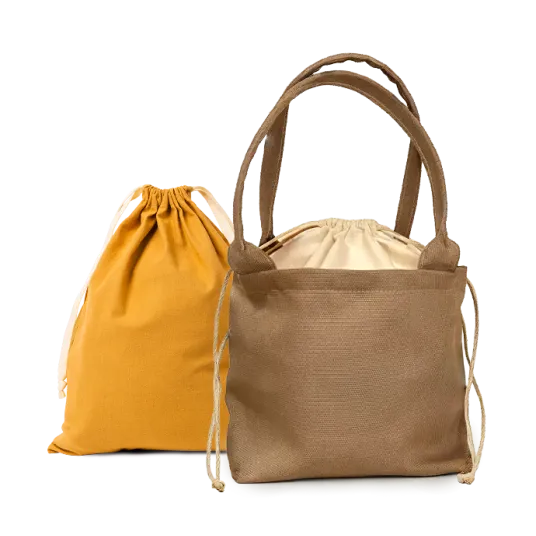
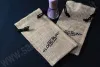
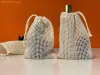
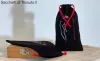
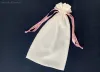
Today, this fabric is particularly appreciated for clothing such as sweaters, sweatshirts, skirts, and structured yet comfortable jackets (especially in the jersey version). Being fairly dense, it is also suitable for manufacturing accessories like bags, clutches, and hats, or tailoring details (e.g., collars and cuffs). Given its qualities, it has found a place in the packaging sector, where it is mainly used to accompany luxury goods. At Sacchetti di Tessuto, we offer it in ottoman fabric bags for storing fine footwear: a refined solution that combines practicality and elegance with intriguing tactile quality.
Finally, interior design has also embraced the charm of this fabric, with many sofas, ottomans, and armchairs upholstered in ottoman fabric, offering a very chic look.
Caring for Ottoman Fabric
As with other fabrics—Jacquard being a prime example—the care depends on the yarn composition. In general, before washing, it is always advisable to carefully read the label to check manufacturer instructions.
Depending on the material, gentle washing at low temperatures or dry cleaning may be appropriate. It is also best to avoid aggressive drying programs that could damage the ribs and, if possible, dry the garment flat or on a hanger to prevent distortion.
Regarding ironing, be careful with high heat: ironing the garment inside out is an extra precaution that helps flatten wrinkles without damaging the fabric.
Overall, ottoman fabric is sturdy but not indestructible. Handling it with gentle cycles, moderate temperatures, and light ironing helps preserve its characteristic raised ribs over time. Perhaps even its ancient inventors knew this secret!