





































In questo articolo
“In 2020, the textile sector was the third largest source of water resource degradation and land use”: this is stated in the latest EU update on the environmental impact of textile production and waste. The detailed figures are alarming and the issue requires large-scale interventions. However, both individuals and companies can contribute by adopting conscious behaviors and making sustainable choices. One example concerns packaging, which offers green solutions and recycled fabrics for product packaging. This is a line that we at Sacchetti di Tessuto have been pursuing for some time: let’s explore together what recycled fabrics are, how to choose them, and what the advantages are.
What is meant by recycled fabrics
Recycled fabrics are derived from non-virgin raw materials. This can be material already used (post-consumer), such as plastic bottles, old garments, or other fabrics; or production waste (pre-consumer), such as textile scraps or defective products that cannot be sold.
There are two main methods for producing recycled fabrics:
- mechanical recycling, which involves shredding and crushing the fabric to obtain a form similar to fiber. However, fabric quality is often compromised during the process, requiring the addition of virgin fiber, thus reducing the environmental benefits of this procedure;
- chemical recycling, which uses substances to break down and transform the original fibers into other reusable fibers. Although more energy intensive than mechanical recycling, the chemical process is still advantageous compared to virgin production.
But which fabrics can be recycled?
Main recycled fabrics available today on the market
In general, to be recyclable, fabrics must be as pure as possible, meaning made of the same material in high percentages (at least 80%). Blended fabrics, on the other hand, rarely enter the recycling chain at end of life because separating the fibers and obtaining new ones is more difficult. For this reason, they often end up in landfill or incineration. Additionally, some finishes and treatments applied to fabrics can make them non-recyclable.
The reuse process thus begins at the source, at the design stage of the garment or textile item.
Cotton, wool and cashmere, polyester and nylon are fabrics most frequently recycled with qualitatively satisfactory results.
Recycled cotton
Recycled cotton is one of the most sustainable and environmentally friendly types of cotton. It is mainly produced through mechanical methods that break down the fabric to obtain new fibers for re-spinning. This limits new cotton production, thereby saving water and natural resources, and avoiding the use of pesticides and other harmful substances often used in virgin cotton cultivation.
However, it is important to note that during recycling, cotton fibers shorten, affecting the quality and durability of the final product. Therefore, recycled cotton is often blended with other fibers (for example, synthetic) which, however, reduce its positive environmental impact.
Because of this tendency to degrade over time, after a varying number of cycles depending on method and material type, cotton fibers are also used for other purposes, usually non-textile, such as insulation or padding.
Regenerated wool
Wool can also be given a second life thanks to the regeneration process. This natural fiber is processed to create new clothing from scraps or discarded garments. The procedure is mechanical: the rags (as the starting wool pieces are called) are sorted by color and material type. Buttons, zippers, labels, linings, and any other attachments are removed. The next step is carding, which produces fibers for re-spinning to obtain clothing of the same initial quality.
Recycled polyester (rPET)
Polyester (also known as PET or polyethylene terephthalate) is a petroleum-derived material that is non-biodegradable and therefore not sustainable. However, it is the basis of much everyday plastic use, such as bottles and containers. Recycled polyester (rPET) is made from these and other plastic wastes, preventing them from polluting the environment and oceans. Considering that, according to the WWF, between 4.8 and 12.7 million tons of plastic waste enter marine waters annually, it is clear how recycling is a beneficial path for nature and humans alike.
How is recycled polyester produced? The most common method is mechanical: plastics are first sorted by color, then shredded and melted in specialized furnaces. They are then spun to create new textile fiber. This fiber retains the characteristics of the original for a long time, but may degrade over time.
Recycled polypropylene (rPP)
Polypropylene is a synthetic fiber derived from petroleum waste, common in packaging and sportswear. Like PET, it can be recycled and transformed into new objects, including accessories (bags, pouches), construction materials (plastic slats and profiles), automotive parts (bumpers, gears), and fabrics (clothing, rugs, insulators). It can undergo both mechanical and chemical recycling processes, with fairly high performance though not always comparable to virgin polypropylene.
Generally, polypropylene recycling reduces plastic waste and is less energy consuming than virgin production.
Recycled nylon
Among synthetic fibers, nylon can also be recycled, and today many companies specialize in this processing, producing yarns with various names, such as the Italian Econyl. Recycled nylon derives from discarded garments, fishing nets, or industrial waste, and the resulting fabric can be used to produce apparel and new accessories.
Like cotton, nylon tends to lose quality the more it is recycled, unless it is nylon 6, a particular synthetic fiber type that can be depolymerized and repolymerized indefinitely while maintaining its properties.
For the process to be truly advantageous, it must be closed-loop, with no harmful releases into the environment.
How to determine if recycled fabric is truly quality: certifications
Saying "recycled" or "sustainable" is not enough: as we have seen, raw materials and subsequent processing can greatly affect finished fabric quality. This is why it is important to know and verify any relevant certifications.
Among the most common and reliable are:
- GRS (Global Recycle Standard), an international certification for recycled fabrics promoted by the nonprofit Textile Exchange. It follows rather strict criteria aiming to ensure the quality of recycled materials, traceability of the production chain, and compliance with environmental and safety standards throughout the supply chain. The certification applies to products made of at least 20% recycled materials, but the label can be issued only for products with a minimum content of 50%.
- RCS (Recycled Claim Standard) verifies and assesses the presence and quantity of recycled material in the finished product, and is engaged in tracing the chain of custody to confirm material quality in the production chain. It applies to any product composed of at least 5% recycled material;
- Oeko-tex® is an international standard certifying that the final product is ecologically compatible, from fabric to buttons and all components. The Oeko-tex® Standard label certifies the absence of harmful substances – a guarantee of quality and safety for people – and includes a mention for recycled materials;
- EU Ecolabel: like GRS and RCS, this is a voluntary label valid in Europe. The certification promotes products and services with reduced environmental impact over their entire life cycle, including recycled fabrics that meet specific requirements.
Concrete benefits for companies choosing packaging in recycled fabrics
Recycled fabrics concretely contribute to reducing waste and limiting consumption of valuable resources such as water and energy. Giving new life to already existing fibers, for example by choosing packaging made from recycled fabrics, means cutting CO2 emissions linked to virgin material production and decreasing overall Planet impact.
But it is not “just” an ethical choice: sustainable packaging represents a genuine competitive advantage for companies. In a market increasingly sensitive to climate change issues, demonstrating environmental care becomes a distinctive element that strengthens brand reputation and creates a more authentic bond with consumers. Authentic and lasting. A fabric bag made from recycled fabric is not just any packaging: it is a durable, washable, and reusable object that can continue to circulate well beyond the moment of purchase. This turns packaging into an effective communication tool: each time the end customer reuses the bag, the brand renews itself in people’s memory and gains additional visibility.
Economically, using recycled materials can also lead to cost reductions in the long term, especially when production volumes are high. Moreover, adopting eco-friendly solutions facilitates access to environmental certifications and improves positioning in funding applications and tenders, where ESG criteria are increasingly relevant.
How to choose the right packaging in recycled fabric for your products
How to choose the most suitable packaging in recycled fabric for your products? It depends greatly on the content, the packaging function, and the type of experience you want to provide your customers. It is about finding the right balance between functionality and aesthetics.
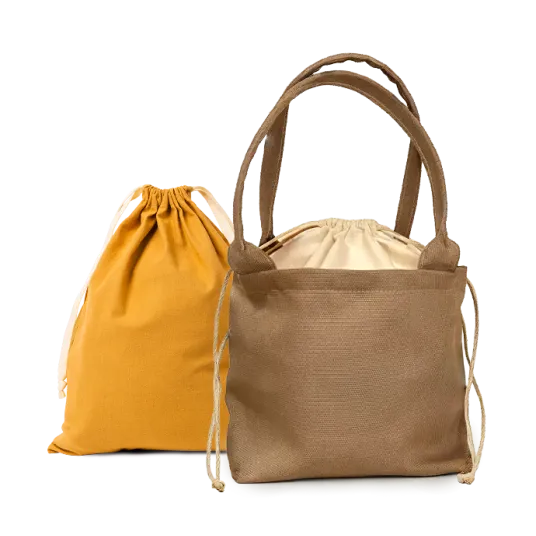
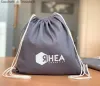
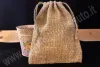
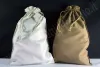
In general terms, recycled cotton is ideal for tote bags and reusable pouches intended for retail. It is soft, durable, and conveys a natural and ecological image, perfect for companies wanting to emphasize authenticity and craftsmanship. Furthermore, it can be manufactured in various shapes, colors, and prints.
Recycled nylon, instead, tends to be more technical and lightweight, suitable for resealable bags, water-resistant and durable: thus more suited to the sports, outdoor sectors, or brands seeking innovation and practicality. Recycled polyamide and PET are ideal for packaging heavy products or those requiring greater protection; while regenerated wool, more refined and prestigious, is perfect for bags and packaging destined for high-end products such as fashion accessories or luxury items.
Choosing the format and customizations is also crucial. Beyond the material, it is important to consider the possibility of customizing the packaging with eco-friendly prints, reinforced stitching, or other design details. Careful study and consideration of these features indeed transform the recycled fabric bag into a natural and virtuous extension of the product, strengthening the relationship with the customer and brand awareness.
Would you like to discover more about our proposals in recycled material or other green solutions?