








In questo articolo
After discussing cotton, we continue our series dedicated to fabrics by sharing the history of linen. Originating as a bandage for mummification in Ancient Egypt, linen has stood out over millennia for its many qualities, making it today one of the oldest, strongest, and most ecological fabrics available.
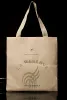
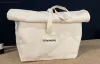
From bedding to kitchen textiles, from furnishings—such as curtains, armchairs, rugs, and tapestries—to ecological fabric packaging, and extending to the fashion sector, linen serves a wide range of sustainable applications.
Let’s explore its history.
The history of linen and its uses
Linen fabric comes from the Linum usitatissimum plant. Even millennia before Christ, linen was used for funerary purposes by the Ancient Egyptians. Its introduction to Europe came through the export of fabric to Ireland by the Phoenicians and later became significant during the Roman Empire.
The Romans were the first to use it not only for clothing but also for household items, developing more advanced manufacturing techniques. During the Middle Ages, its use extended to bed linens and shirts. Linen processing techniques evolved further over the centuries, with countries such as the Netherlands, France, and Russia beginning to cultivate and process the plant. The industrialization of the 19th century also focused attention on linen within the textile sector.
Today, cultivation, harvesting, and processing techniques continue to advance, making linen a modern fabric that meets consumer demands for sustainability, quality, and aesthetics.
A curious fact: besides fabrics used in fashion, packaging, and furnishings, flax tow is also used to produce paper and to create rope and twine.
Types of linen
The flax plant grown for textile fiber differs from that used for food purposes; it grows tall and has few branches. Usually, different types of linen can be obtained from these plants, varying according to fiber fineness.
Specifically, we distinguish between:
- Fine linens: used for handkerchiefs and household linens. A well-known fine-weave linen is Batiste.
- Medium-fiber linens: used for garments and bed linens.
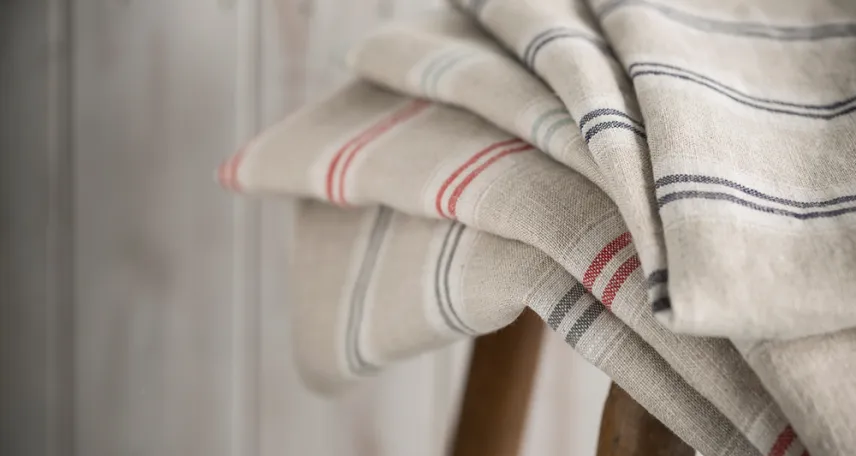
- Coarse-fiber linens with regular weave: used for sturdy tablecloths and kitchen towels.
Linen processing
The flax plant grows up to 1.2 m tall and is cultivated both for its seeds and for the fiber from which fabrics are produced. The cultivations are mainly located in Europe and Egypt, although treatment times and methods vary slightly. For example, sowing takes place in March in Europe and in January in Egypt.
One of the first processing steps after harvest is retting, which involves prolonged exposure of the stalk to moisture. In Europe, retting is done on the ground: stalks are evenly spread over a field where they are subjected for 2-3 weeks to a combination of air, sun, and dew. This process causes fermentation, which helps break down much of the stalk.
In Egypt, the flax plant is pulled out and immersed in stagnant water to rett, producing fibers of very high quality.
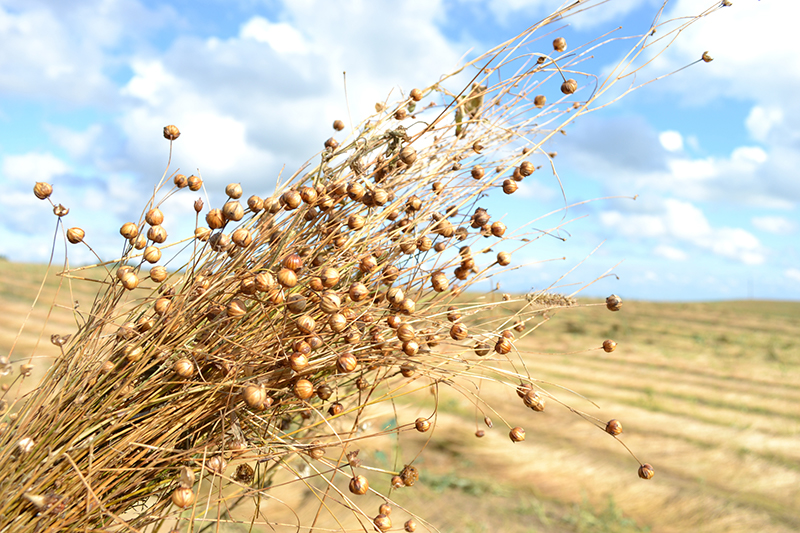
After retting, the stalks are dried naturally—exposed to open air—or mechanically. If, at this stage, they remain woody and still attached to the flax fibers, the stalks undergo a further breaking process called scutching.
This process yields a coarse fiber composed of a long, woody fiber and a short fiber. Both are then straightened through specific steps to become uniform and homogeneous.
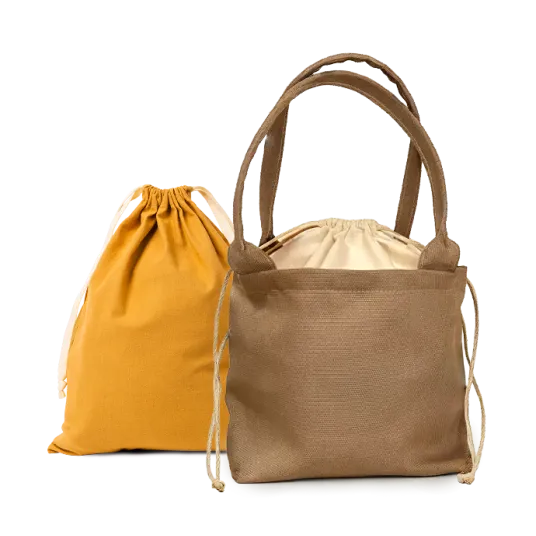
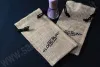
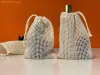
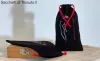
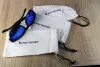
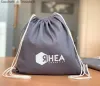
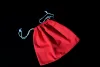
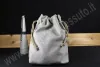
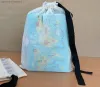
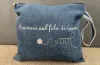
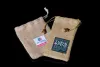
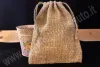
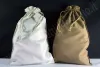
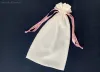
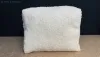
At this point, the fiber is ready for spinning into fine yarn, destined to become intimate apparel, premium fabrics, or a charming pure linen bag for fashion accessories.
Linen processing stages in brief
Summarizing, linen processing can be divided into four main stages:
- Harvesting. The plant is pulled from the soil and retted. Harvest timing varies depending on the desired fiber type; for finer fibers, the plant is harvested quickly while still tender, whereas waiting longer yields coarser fiber.
- Scutching. This stage extracts the flax fibers from the plant, followed by cleaning and combing.
- Spinning. Once cleaned and combed, the flax fibers undergo various techniques to produce the final products.
- Finishing. The final step enhances the fabric according to the intended product. For example, the fabric can be dyed or treated to stiffen the fibers, increasing resistance and durability.
Washing the fabric
Linen fabric is durable but tends to wrinkle if stored improperly or washed inadequately.
White and bleached linen fabrics can be washed at a maximum temperature of 60°C. Colored fabrics tend to release dye when washed, so it is advisable to separate them from other garments during early washes, especially from white items. Also, they should be washed with a mild detergent without bleach, at a temperature no higher than 40°C.
For drying, it is necessary to wring the fabric thoroughly and dry it in the sun, avoiding the formation of wrinkles that easily lead to creasing or moisture stains. Ironing requires care as well: the iron should be applied hot while the fabric is still slightly damp and turned inside out.
Why choose linen over other fabrics
Linen is one of the most durable fabrics due to its cellulose component reinforcing its fibers. Its not too tight weave makes linen breathable, light, and cool to the touch. It offers insulating, thermoregulatory, and moisture-absorbing properties, making it an ideal fiber for both clothing and household linens.
It is also considered a noble material since, as a natural fiber, it is hypoallergenic—so it does not irritate the skin or attract dust—and is 100% sustainable, biodegradable, and recyclable.
The advantages of linen
Now that we have a comprehensive overview of linen and understand its properties and characteristics, we can summarize its advantages. Specifically, linen is a fabric that is:
- resistant to washing and wear: its composition makes it long-lasting;
- sustainable: the fiber is natural, recyclable, and biodegradable;
- breathable: it absorbs moisture without retaining it;
- thermoregulatory: it adapts to the climate, providing coolness or warmth;
- hypoallergenic: it does not cause allergies.
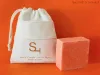
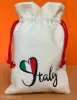
These advantages help explain why linen is preferred over other fabrics. This natural material adapts to varied uses and commercial needs. For example, you can use a pure linen bag for packaging fashion accessories, organic cosmetics, body care products, and even pre-packaged food items.