










































In questo articolo
Cotton is one of the most widely used natural fibers in the world, valued for its versatility, breathability, and durability. However, not all cotton is the same: there are different types, each with specific characteristics that affect quality, performance, environmental impact, and practical applications. Knowing them is essential to make informed purchasing decisions and to enhance your products with the right packaging.
Why cotton is so widespread (and why it is important to know the varieties)
Cotton is a very common natural textile fiber due to its unique properties: it is soft to the touch, durable, easy to work with, and suitable for numerous uses, from fashion to home furnishings, and even fabric packaging, also thanks to its ability to hold colors. Additionally, it is reusable and biodegradable and, in some variants, can be cultivated and processed in ways that respect the environment.
Depending on the type of cotton chosen, it is possible to obtain finished products that are softer or less, more or less durable, and aesthetically pleasing. The variety can also influence the final texture of the fabric, whether finer or coarser.
Beyond quality, it is important to also consider sustainability, linked to agricultural practices and the processing methods used to produce the material.
Finally, it is useful to know that some varieties are easier to handle or cheaper to source, thus affecting cost and production efficiency.
What cotton is and how it is obtained
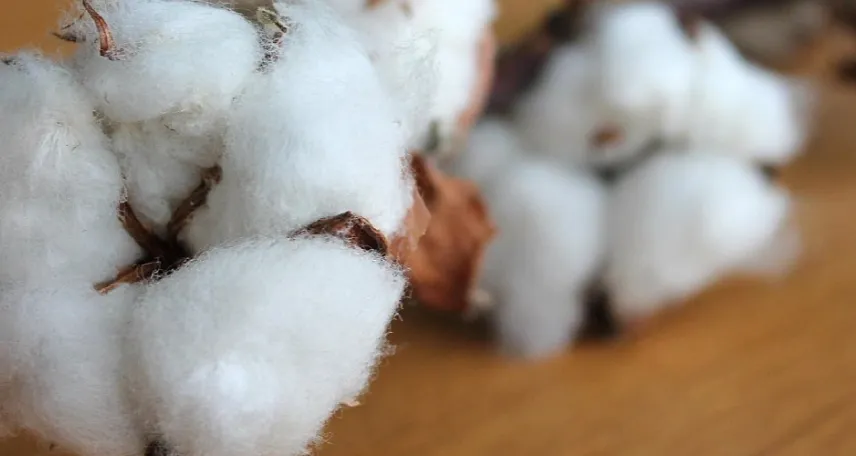
Cotton (from the Arabic qutn) is a soft and silky fiber extracted from certain plants of the genus Gossypium, belonging to the Malvaceae family, native to tropical and subtropical regions of Asia, Africa, and the Americas. The most cultivated species are Gossypium hirsutum, Gossypium barbadense, Gossypium arboreum, and Gossypium herbaceum. The fiber develops around the seeds, inside the fruits (in the form of capsules). Once mature, the fruits open, releasing the characteristic white tufts, similar to fluff, which cover the seeds. Besides textiles, cotton is used for edible oil production, paper, animal feed, and even medicinal products.
Life cycle and harvesting
The plant is sown in spring and takes about 5-6 months to complete its cycle, provided it grows in favorable humidity and temperature conditions. It is a type of cultivation very sensitive to environmental conditions and requires careful agricultural management to maximize yield and fiber quality.
The life cycle includes 5 stages:
- germination and emergence: the root tip emerges within 2-3 days, while seedlings appear above the soil between 5 and 10 days after sowing;
- seedling stabilization: the root grows rapidly downward, reaching a depth of 25 cm;
- development of leaf area and canopy: the cotton plant develops the main stem and two types of branches: monopodial (vegetative), resembling the main stem, and sympodial (fruit-bearing), which carry flower buds;
- flowering and fruit development: reproductive growth begins about 4 or 5 weeks after sowing with the formation of flower buds at the top of the plant and, later, fruit. The fibers reach their maximum length about 25 days after fertilization;
- maturation: this essential stage involves fiber thickening through daily deposition of cellulose layers on the inner wall, a process influencing its strength and maturity. Until the fruit opens, the fiber is a living cell; once open, it dries and twists.
The final quality of cotton in terms of length, maturity, strength, and micronaire is determined by a combination of genetic factors, suitable climate conditions, and optimal crop management.
Primary processing: ginning, spinning, weaving
Cotton harvesting can be manual or mechanized, depending on the type of cultivation. In more industrialized contexts, harvesting is mechanical using pickers that remove the fibers from the plants and collect them into large bales.
The freshly harvested cotton is left to dry in the sun for a few days before undergoing ginning, the crucial initial process that separates the fiber (lint) from the seeds and remaining fluff. Careful cleaning of the fibers, removing dirt and other impurities from the lint, is essential at this stage to ensure the cotton is pure and ready for transformation into yarn.
The next step is spinning: converting fiber into yarn. This involves several processes and can be carried out in different ways, but generally aims to make fibers stronger and cohesive by twisting them together. During spinning, dyes can also be added to color the yarn, depending on production requirements.
Finally, weaving—manual or mechanical—follows, consisting of interlacing yarns to create fabric. The basic principle of weaving is interlacing two yarn systems: warp (threads arranged longitudinally, stretched on the loom) and weft (threads interlaced transversally, inserted one by one through the warp). This crossing can follow various patterns, called weaves, producing fabrics that are more or less dense, smooth, or textured.
Classification of cotton types
Cotton is not a homogeneous fiber and, for this reason, it is classified based on several characteristics, primarily fiber length and botanical variety, which determine its properties and end uses.
Based on fiber length
Fiber length is the most critical factor in cotton classification and directly influences the quality of the yarn produced. Longer, finer, and stronger fibers are considered superior for producing finer and more valuable yarns.
There are four main fiber length categories:
- short staple cotton: fiber length typically ranges from 10 mm to 18 mm; quality is modest, less durable, and more economical compared to other types;
- medium staple cotton: fiber length ranges from 18 mm to 28 mm;
- long staple cotton: fibers vary from 28 mm to 48 mm, providing strength, softness, and durability;
- extra-long staple cotton (ELS): this rather premium category includes cottons with particularly long fibers.
Based on botanical variety
Historically, cotton classification was often linked to its region of origin, but today it more precisely identifies the intrinsic characteristics of different cotton types.
The most widely cultivated variety worldwide is Gossypium hirsutum (American Upland), native to Mexico and Central America, with fibers about 22 to 24 cm long. It is extensively used for medium to coarse yarns, mainly intended for industrial applications.
The species Gossypium barbadense has South American origins and includes Egyptian cotton, Sea Island, and American Pima. Egyptian cotton, grown along the Nile, is known for its long, fine fiber. Soft, lustrous, and very durable, it is often used for linens and luxury goods. Sea Island is cultivated in small quantities in the Caribbean and some areas of Florida; it is extremely rare and premium, offering very long (40-60 mm), fine, and shiny fibers. Its high cost makes it suited only for ultra-premium products. Lastly, American Pima—known in the United States as Supima® cotton—provides long fibers of exceptional softness and strength, highly valued in the premium sector.
Finally, the Gossypium herbaceum and Gossypium arboreum varieties (Indian/East Asian) have shorter fiber lengths. Indian cotton, in particular, is characterized by a certain fineness and gloss, but feels coarser to the touch. For this reason, it is considered less valuable than others and is often dyed or printed and used to produce sheets and bedding.
Organic cotton: differences from conventional cotton
Given growing awareness of the social and environmental impacts of the conventional textile industry, cotton producers are also exploring and adopting more sustainable approaches. The goal is to reduce ecological damage, improve working conditions, and promote more responsible production.
In this context, organic cotton (organic cotton) represents one of the most significant responses to sustainability challenges: it is grown, processed, dyed, and finished using methods that respect biodiversity and workers’ rights, without the use of pesticides and harmful chemicals for the environment and people. Its ecological footprint is therefore lower than conventional cotton’s and, although slightly more expensive than traditional cotton, it is appreciated by those seeking sustainable solutions also for packaging.
But how to prove and verify that cotton really comes from organic farming?
For example, through the Global Organic Textile Standard (GOTS), the most important international standard for organic textiles. GOTS ensures that cotton is organically cultivated and that its processing follows strict environmental, health, and socially responsible regulations throughout the entire supply chain, from field to finished product.
Recycled and regenerated cotton
Recycled cotton, also called regenerated cotton or shoddy, refers to cotton fibers that have been processed and reused from various types of waste. These are divided into pre-consumer waste, generated from yarn and fabric by-products; and post-consumer waste, such as garments, upholstery, towels, and other discarded household items. The recycling process usually employs mechanical methods.
This type of cotton also offers several sustainability advantages, as it helps reduce demand for new cotton fibers, preserving natural resources. Moreover, using already processed material limits consumption of energy, water, and dyes (and greenhouse gas emissions) required for producing new fibers.
It should be noted that the quality of fibers recovered from recycled textiles does not always match virgin cotton, and fabric properties such as consistency, strength, and uniformity may be partially compromised.
Despite this, recycled cotton remains a very good option to reduce textile waste and reuse materials for various products, including mop heads, rags, and padding.
Would you like to discover all cotton offerings from Sacchetti di Tessuto?
Browse our catalog and explore all cotton solutions: choose by product category or select your preferred fabric type for even more targeted searching. We offer many options that suit every packaging and sustainability requirement!