





























In questo articolo
Jute or Calcutta hemp: what it is, where it originates, and how it is processed
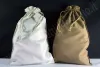
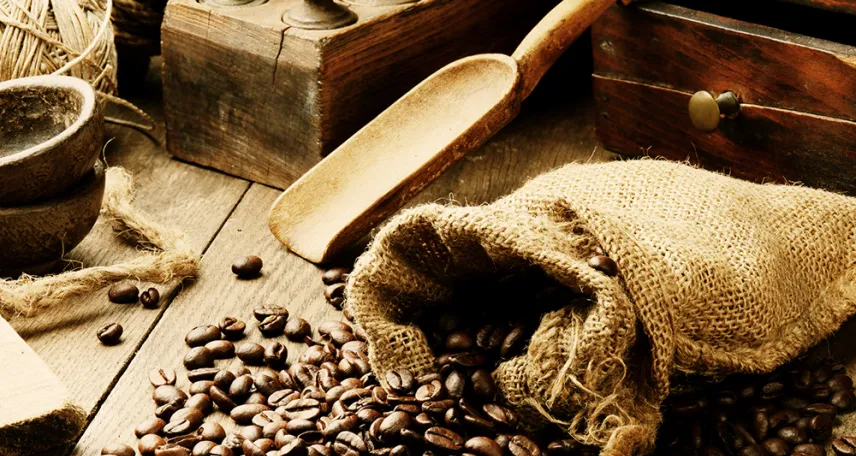
Directly from the tropical regions of Asia, jute is one of the most ancient textile fibres in history. Favoured since ancient times for its ability to thrive in the humid climates of India, jute was perfect for making ropes, weaving common types of canvas, and for bags used to store colonial food commodities like coffee and cocoa. It was, and remains, second only to cotton in terms of use, global consumption, production, and availability. Its arrival in the West was not immediate – this dates roughly to the 18th century – but over time it has gained increasing interest thanks to its complete biodegradability, which today provides us with durable, eco-friendly jute fabric bags to protect food and items.
But where do the jute bags we use so much come from?
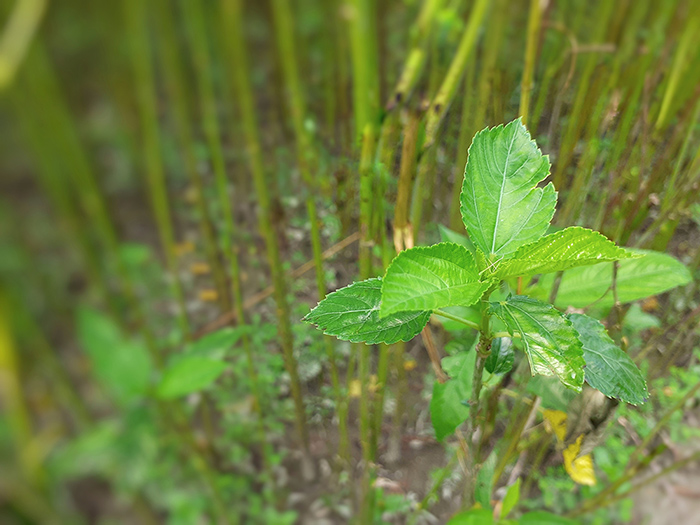
They come from processing a natural textile fibre extracted from plants of the genus Corchorus Capsularis, belonging to the Malvaceae family, present in large quantities in the monsoon regions of the East. The growth of this plant is sensitive to rainfall, which is why the largest global production of jute occurs in the Ganges river area, a humid place with rainfall that is neither too heavy nor too scarce, ideal conditions for cultivating crops. The plant can reach up to 4 metres in height and may vary in colour: from white with a yellowish tint to silver-grey or various shades of brown. It comes in two varieties: Corchorus olitorius, with golden reflections, and the previously mentioned Corchorus capsularis, which has silvery reflections.
The history of the plant and its use
Compared to other textile fibres, jute arrived relatively late in Europe. But its use dates back to the time of the pharaohs! In Egypt, the jute variety Corchorus olitorius was cultivated to obtain nutritious food from the leaves and durable fibre from the stalks. This use was shared by other populations in Africa and Asia, who valued jute for the same qualities and used it both as food and as a textile fibre. In Europe, it arrived only around the 1700s, when the British began trading in jute fibre. In the 18th century, jute was used not just in textiles, but also in fishing, construction, and the arms industry. Initially, its coarse texture only allowed for hand processing. This changed when it was discovered that whale oil could soften it enough for machine processing. At that point, the jute trade increased dramatically until the 1970s, when it began to decline due to the introduction of new, cheaper synthetic textile fibres.
And today?
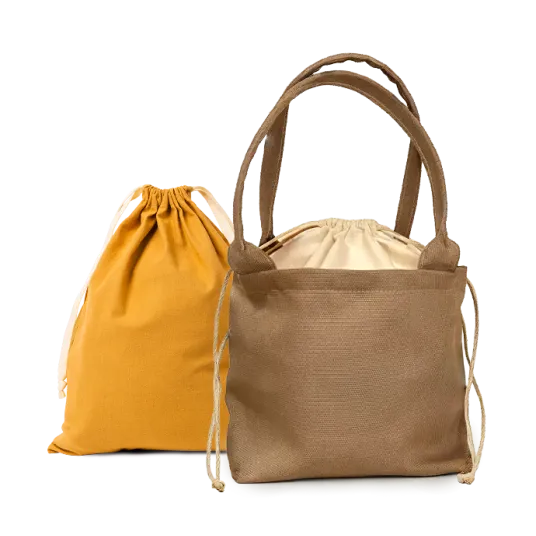
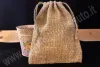
Today, jute has not lost its value; on the contrary, in a context of strong environmental awareness, it is highly appreciated for the sustainability of its cultivation. There are many uses for it. In transport, it is used for packaging, especially for agricultural goods, such as coffee bags or bags for legumes. In agriculture, it is used to contain roots and protect plant stems. But it is especially in the textile sector that it is used to create many types of decorative objects that can be used and reused, such as, for example, flower pot holders, natural jute pouches to use as bags or document holders, or even bottle bags to make a gift look more charming and elegant.
Processing and washing the fabric
The jute stalks are first harvested from the plantation and then subjected to retting to free the fibres from the green material: after drying, they are immersed in water for about twenty days and then dried again. The fibres extracted at the end of this process are washed, dried, and baled. The woody part that remains after the water retting is used as firewood. The fabric obtained, jute canvas, is today mainly destined for the production of packaging and bags. Although it is a very durable fabric, care must be taken when washing it, as it often tends to fray. So, for example, if you need to wash a jute bag for dried fruit, a flower pot holder bag, or other types of jute bags, we recommend hand washing in cold water, using detergent for delicate fabrics and avoiding wringing the material to preserve the product’s original shape. To remove stains, it is better to dab with a sponge moistened with water and ammonia. Jute often has a very distinctive odour. If it is not very strong, it can be removed simply by airing the fabric. Otherwise, just leave some baking soda on the fabric for a couple of days and then rinse it.
Why choose jute over other fabrics?
If you want to create compact, sturdy packaging that is also lightweight and has thickness, jute is undoubtedly a good choice. There is also the sustainability aspect. Each fabric has specific characteristics, and jute stands out because it is completely biodegradable and recyclable, and its cultivation is also sustainable. These features make it versatile. Jute is perfect for a wide variety of uses and can be recycled in many useful ways to transform it into new items or home decorations.
How to reuse jute fabric: tips and creative ideas
We searched online for some suggestions on how to reuse jute. You can put them into practice immediately with the fabric you have at home. For example, if you have an old Christmas jute sack that you haven’t used for a long time, why not transform it into something else? If you run a sustainability-conscious company and package your products with jute bags, you could share these tips with your customers. Here are some ideas to recycle your jute fabric:
1. Transform a coffee bean bag into a plant holder and other objects
With a jute sack, you could create a plant holder for small plants. On the market, you will find many types of jute plant holder bags that are perfectly sewn and finished, but if you have some spare jute fabric and enjoy DIY, you can cut a piece of fabric and wrap it around a pot, tying it with a coloured or white ribbon to keep it in place. Or why not make charming cutlery holders for special dinners? Simply cut two rectangles of different sizes from the sack you want to recycle, place the smaller fabric rectangle on top of the larger one, and sew on three sides. Leaving one side open will create a pocket to hold the cutlery. Sewing lace all around can make it look more elegant. Another nice idea, especially for Christmas, is creating small festive decorations like these
:

2. Transform a printed jute sack into a cushion and other ideas
If the sack you have is printed, the best way to recycle it is to turn it into a cushion. Simply fill the sack with clothes, old towels you no longer use, or with wool, then sew the edges tightly. The result is an original decorative accessory. But there are many other ways to recycle old jute sacks. Why not create a nice keychain? Just cut the printed part of the sack, insert some cotton, attach a hook, and sew it up again. Or opt for a very simple but always appreciated idea: cut the jute into many small squares and use them to cover jar lids you have at home, as shown in the image below. IMAGE
Curiosities
The term "Jute" is not the only way we can refer to this type of fabric. It is also known as Corcoro (from Corchorus Capsularis) and as Calcutta hemp, due to its similarity and distant relation to hemp. In Italian, both “iuta” and “juta” are considered correct spellings.