






































In questo articolo
Sustainability is one of the increasingly important criteria for Italians when choosing and purchasing. This is revealed by the research “Sustainability is quality”, conducted by Ipsos and the Symbola Foundation now in its third edition. The survey shows that the quality of sustainable products, perceived as innovative and high-performance, is the main reason driving consumers. This is followed by concern about climate change and ethical principles. Thus, sustainability is an increasingly significant and complex issue that intertwines practical reasons, fears, and individual sensitivities, resulting in more responsible behaviours oriented towards the protection of nature and its resources.
But how can one stand out in an increasingly attentive and complex market? For instance, through certifications: official recognitions that testify, nationally or internationally, to companies’ commitment to protecting the environment and people.
Among the most renowned and reliable is the GRS (Global Recycle Standard), which applies to recycled fabrics used in fashion and other sectors, including packaging.
What the GRS certification is and what it guarantees
The Global Recycle Standard is the most important international standard for recycled fabrics and textile products made from recycled materials. It is a voluntary and comprehensive certification, promoted by the non-profit association Textile Exchange together with the RCS (Recycled Claim Standard). Currently, there is a process of unifying the two certifications and revising evaluation criteria, expected to come into effect starting in 2026.
To date, GRS is known for its reliability and breadth: this label goes beyond the simple product and includes social and environmental aspects. The main guarantees provided by the standard concern the recycled material content, traceability, social criteria, and chemical requirements: let’s examine these in detail.
Recycled material content (recycled material requirements)
GRS ensures the recycled content in intermediate and finished products. Both pre-consumer materials (production waste) and post-consumer materials (no longer usable items such as fishing nets or old carpets) are accepted, provided they comply with the ISO definition of "recycled".
A product can be certified GRS if it contains at least 20% recycled materials. However, only products composed of at least 50% recycled materials may use the consumer-facing label.
Traceability (supply chain requirements and custody chain)
The traceability of the entire production process is also subject to control and certification. GRS guarantees that the identity of the recycled content is maintained from raw material through to the final product (custody chain).
Verification is conducted at every production stage, from recycling through to the seller of the last business-to-business transaction. The collection, sorting, selection, and grouping of waste are excluded from this investigation.
Social and environmental requirements
Respect for workers and the environment throughout the production chain is another essential requirement to obtain GRS. On the social side, GRS companies must comply with strict criteria, inspired by the Global Social Compliance Programme. For example, they must ensure the presence of personnel responsible for compliance with the programme's principles and policies to communicate social commitments to workers.
On the environmental front, the aim is to minimize harmful impact, ensuring products are processed as sustainably as possible.
Chemical restrictions (chemical requirements)
GRS includes restrictions on the use of chemicals in manufacturing processes, which must be reviewed by an approved certification body.
It is important to note that this certification covers only the use and management of chemicals in the production of GRS products; it does not guarantee the entire company. Moreover, it does not exclude the presence of chemical compounds in regenerated products used as input in GRS-certified production.
Scope of application
The precise requirements and scope beyond material verification make this standard particularly sought after and effective among buyers, both other brands and end customers.
There are many certified companies worldwide. For example, in Italy alone, ICEA – one of the institutes responsible for certification verification – includes over 1600 companies.
Generally, accredited entities are often classified based on the type of material used: cotton fibre, recycled polyurethane, recycled polyester, recycled polyamide, recycled nylon, recycled viscose, regenerated wool, regenerated silk, and so on.
How to obtain it: process and methods
As mentioned, GRS is a voluntary standard, and companies that choose to obtain it undergo an evaluation (paid) by third-party bodies. In Italy, there are several certification bodies whose procedures may vary but generally follow a multi-step process:
- Certification application: the interested company must submit a request to the designated body accompanied by specific documents and payment of the evaluation fee;
- Preliminary assessment of the production process and products for which certification is requested, to verify that all documents are correct and complete, product composition, raw materials, sourcing, and chemicals used;
- On-site inspection (audit) at the company's premises to verify actual compliance and adherence to GRS characteristics, possibly including product sample collection;
- Issuance of the certificate of conformity by an evaluation and certification committee that reviews data and information collected during the assessment and inspection. If successful, the company is entered into the register of certified products;
- Surveillance: during the certificate's validity period, periodic inspections are carried out to ensure continuous compliance with GRS requirements.
Differences compared to other certifications
GRS is particularly appreciated and sought after precisely because of its features, the relatively broad range of aspects considered, and stringent evaluation criteria. It is not the only textile certification available: GOTS (Global Organic Textile Standard), for example, is the voluntary international standard for organic fibres; OCS (Organic Content Standard) ensures that the fabric contains the declared percentage of organic fibre; OEKO-TEX Standard 100 is an independent certification system focused on consumer health and the environment.
The standard most similar to GRS is RCS – also issued by Textile Exchange – but the two differ in some key aspects. One concerns the minimum recycled material content required for labeling: 50% for GRS, 5% for the RCS Blended logo; 100% for the RCS 100 logo. GRS also includes chemical restrictions (chemicals with potential harmful effects are not allowed), while RCS does not specify chemical additives used. Another difference concerns environmental management: GRS sets environmental requirements to ensure minimal impact and maximum sustainability; RCS does not. The same applies to social implications, which are excluded from the Recycled Claim Standard.
Why choose GRS-certified fabrics?
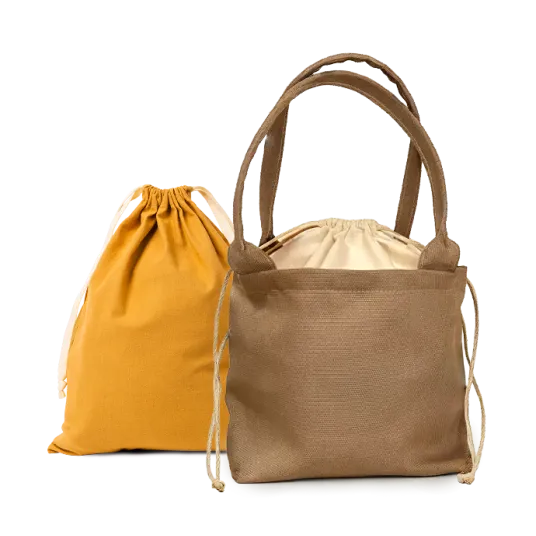
Choosing Global Recycled Standard-certified fabrics for your products or, why not, for their packaging offers numerous advantages and guarantees. First of all, as a widely recognized certificate, it is a synonym of reliability and generates credibility with buyers. Moreover, an increasing number of companies and sustainability-sensitive marketplaces impose eco-compatibility requirements on brands.
Practically speaking, choosing GRS-certified fabrics helps reduce the production impact. The standard promotes reducing the consumption of virgin raw materials, water, and energy, and aims to increase the quality of recycled products. Not to forget aspects related to working conditions, ethical transparency, and the health of the planet and people, thanks to controls on chemical substances.
Finally, the GRS certification allows customers (both brands and consumers) to make informed decisions. In a context where we are increasingly involved in sustainability and the need to understand the environmental and social impact of our purchases is spreading, the GRS logo acts as a third-party verified guarantee.
This is why choosing GRS fabrics, from manufacturing to packaging, means not only certifying the recycled origin of the material but also securing a series of direct and indirect benefits that can make a difference in a (fortunately) increasingly attentive and informed market.