





































In questo articolo
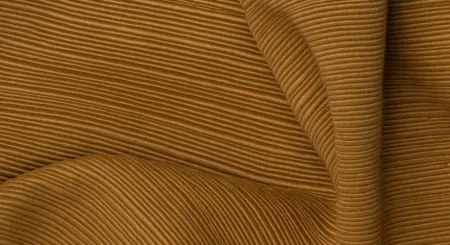
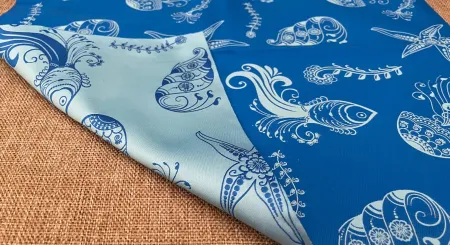
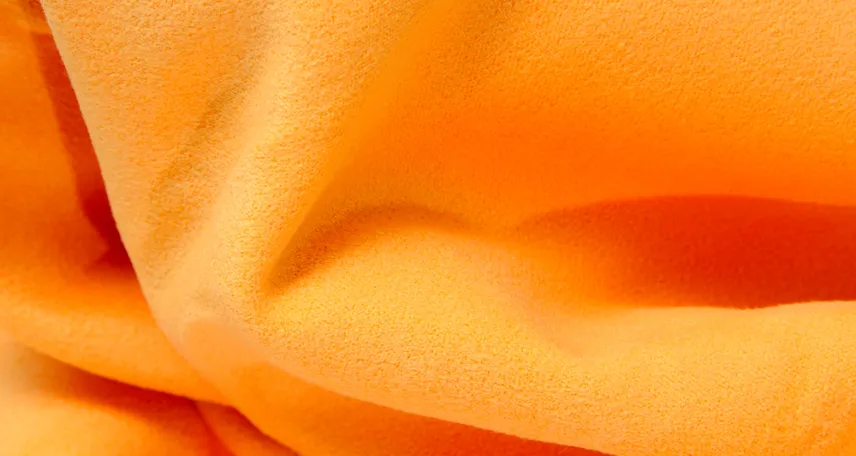
Microfiber fabrics are widely used in the apparel sector, accessories, and also in home and cleaning products. Thanks to a synthetic fiber that makes the fabric soft, lightweight, breathable, and durable. The maintenance of fabric bags made of microfiber, in fact, is not complicated: they can be cleaned by hand or in the washing machine.
It is important to understand the characteristics of this special technical fiber, thus avoiding the risk of stiffening the fabric and consequently losing the qualities that make it so appreciated and versatile. For this reason, we have gathered some advice on how to wash bags and all the microfiber fabrics you have at home!
Microfiber, a soft and versatile fabric
Unlike cotton, linen or hemp, the term “microfiber” does not refer to a natural fiber, but is the name given to a group of synthetic fibers characterized by particularly fine threads. Today the use of the term microfiber is established by law, specifically by the textile labeling law no. 194 of 1999, which specifies that it is a technical fiber with a titre equal to or less than 1 Dtex. Dtex indicates how many meters of a given fiber are present in one gram of weight, and 1 Dtex equals 10,000 meters. Microfibers were developed by textile technology starting in the 1980s with the goal of creating a fabric that could have specific characteristics: softness, lightness as well as a particular and high capacity for water absorption.
It is no coincidence that the first application field of microfiber was the cleaning sector. Cloths made of this material are perfect for cleaning many types of surfaces without leaving streaks. Since its creation, its uses have greatly increased, as has the range of microfiber types on the market. Among the most common are acrylic fiber microfiber, nylon, polyester, or hybrids. Each type is suitable for a different use; as we anticipated, microfiber is used to make sportswear or technical garments, underwear and household textiles, but also to make breathable and lightweight fabric bags.
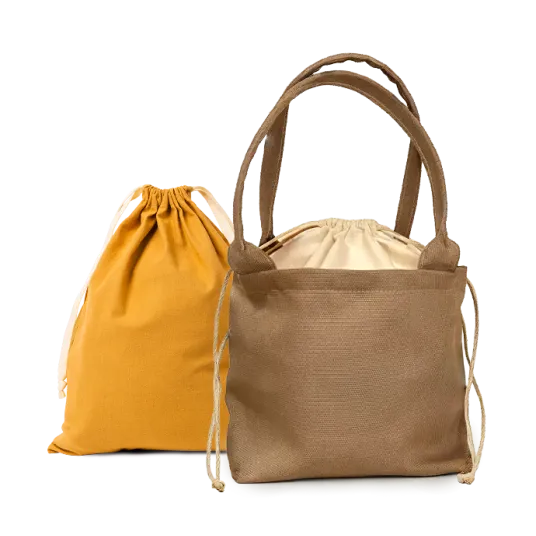
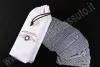
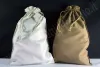
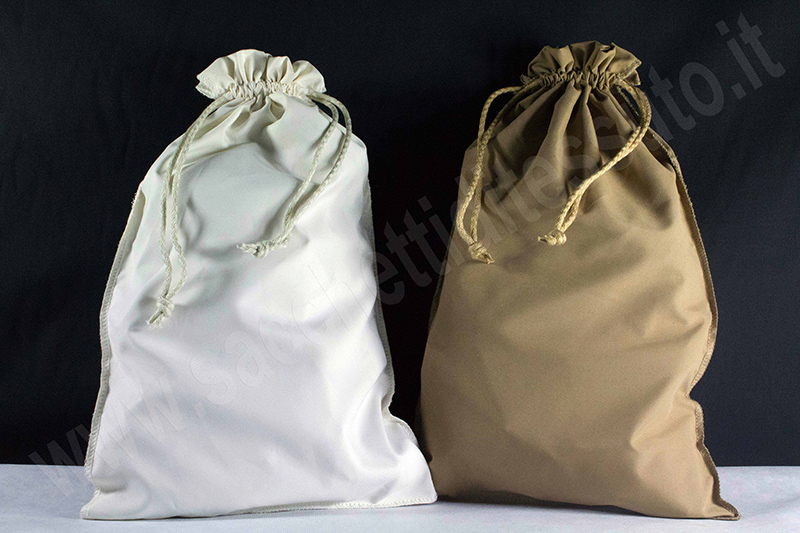
The photo below shows an example of a microfiber bag with a double drawstring closure designed to contain and protect shoes or other accessories. In addition to two color options, this microfiber bag can be customized with screen printing, other colors and also in size.
What to use to clean microfiber
Microfiber bags, used for storing shoes in the wardrobe or as beauty cases for cosmetics, for example, may become dirty over time and with use, but can also collect some dust. For deep cleaning it is always advisable to wash by hand or machine, following the instructions on the product label and the advice given in the next paragraph.
However, there are also a number of good practices to adopt to prevent microfiber bags or shoppers from gathering dust. For example, they can be dusting frequently with the help of a clean small duster, or another practical way to remove dust is to shake them outdoors from time to time, taking care to remove all objects inside first.
For small stains that do not require washing, maybe caused by opening a beauty product or a not very clean sole, you can try to clean the affected area with a damp cloth and some Marseille soap. In case of more resistant stains, you can also use a mixture of water and baking soda or vinegar, leaving it on for about twenty minutes and then removing the residues with a damp cloth.
To summarize, for proper cleaning of microfiber fabric it is recommended to use:
- natural products such as white vinegar and baking soda, excellent for removing stains and sanitizing the fabric;
- a gentle liquid detergent;
- Marseille soap to be gently rubbed on the fabric with a damp cloth;
It is better to avoid:
- products containing chemical bleaches as they can damage the fabric fibers;
- fabric softeners because they can reduce the electrostatic charge capacity of microfiber fabric;
- bleach which deteriorates and quickly wears the fabric fibers. Sometimes the chlorine-free version can be used, but only if indicated on the manufacturer's label.
Now let's see how to correctly wash microfiber fabrics, both by hand and in the washing machine.
Maintenance of microfiber fabric bags
The maintenance of microfiber fabric bags – as with all materials of this type – is simple. Unlike, for example, linen, which is very resistant but requires certain precautions to prevent yellowing, microfiber is versatile and easy to wash.
The drying phase, and especially ironing, is more delicate as we will see in the dedicated paragraph.
As with jute, it is important to know the fiber characteristics and how it reacts to washing to be sure to reuse our garments and bags for a long time without them losing their natural elasticity and softness.
How to hand wash microfiber
Microfiber fabric bags can be washed either by hand or in the washing machine. In the first case, simply immerse the bag in a basin filled with warm water and soap, preferably natural and ecological. The advice is to leave the bag soaking for about half an hour and, after this time, rinse until all soap residue is gone.
For stubborn stains, you can continue to rub the fabric, but don’t worry if the water becomes cloudy. It is simply the dirt detaching from the fibers, which is why it is important to devote much care to the rinsing phase.
How to machine wash microfiber
Microfiber can also be washed in the washing machine, but be careful with the program you choose! First, remember that the temperature should not be too high, preferably 60°C or below, following the instructions on the label.
Usually, microfiber fabrics tolerate the spin cycle well. So it can be used, but if a strong cycle is planned, it is advisable to put microfiber fabric bags inside another laundry bag suitable for delicate items. Again, the rinsing phase requires attention: if you notice some soap residue remaining, it is better to rinse a second time. It is the combination of dirt and soap that makes the fabric stiffer.
How to dry microfiber
A good rule for many fabrics, including microfiber, is not to leave them in the washing machine after the wash cycle ends. Doing so can cause wrinkles, damage, and loss of the fresh and clean scent.
Therefore, once the washing cycle is finished, you can dry your microfiber fabric bags outdoors. You can hang them on a drying rack, paying attention to where you place the clips as they might leave marks on the fibers.
It is often discouraged to tumble dry microfiber, unless you have a latest-generation model with specific programs for synthetic materials. Since this is a delicate step, our suggestion is to follow the label or manufacturer's instructions to avoid unpleasant surprises.
Ironing microfiber: yes or no?
Finally, here is an answer to a question that can be tricky. The temptation to iron all fabrics is common and driven by the desire for order and cleanliness in the wardrobe, but with this technical fiber it can prove disastrous.
Microfiber should not be ironed, otherwise it is irreparably damaged. What to do then? The first advice is to carefully hang the fabrics, or place them on the drying rack so as to avoid creases caused by threads or clips. Alternatively, you can also fold carefully and "iron" the fabric with your hands once dry to store it neatly in the wardrobe.
If ironing is absolutely unavoidable, proceed with extreme caution, preferring the iron off or set to low temperature. However, handle with great care to avoid burning the fabric!
By following these guidelines, microfiber bags can become almost indestructible. For this reason, at Sacchetti di Tessuto we produce various models in this fiber, designed to contain and protect glasses or shoes. Would you like to know our offers? Browse our catalog!