




















In questo articolo
The success of a brand is often the result of a fortunate recipe created from many distinct ingredients, expertly combined. Essential, of course, is the quality of the product offered to the customer, but there are also many other details that can make a difference. Some examples? The graphic identity, the use of social media and digital channels, and the custom packaging in which you package your creations.
Often these elements represent a true business card for your company and, consequently, should never be underestimated. On the contrary, they offer the opportunity to tell something about your brand to the customer: the name, but also the values that guide it. For example, if your products are green cosmetics or organic foods, using custom and sustainable fabric packaging will make you immediately recognizable.
But how can packaging be made unique, especially if made from textiles? One of the most used techniques is printing. Let’s explore together the benefits and techniques to customize your brand’s packaging and fabric bags!
Custom packaging: all the advantages of printing on fabric, an ancient and timeless art
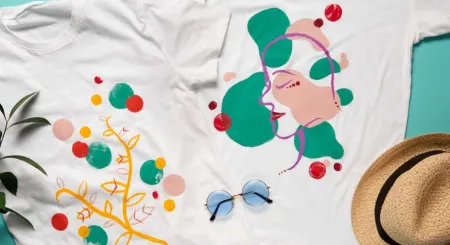
Printing on fabric is a process that allows images, designs, phrases, photographs, logos in black-and-white or color to be transferred onto cloth. Today, it is used to decorate and customize garments, accessories, and various types of textiles, but some printing techniques using wooden blocks were already known in Asia in ancient times: traces exist in China around 200 AD and in Egypt in the 4th century!
In antiquity, printing was already used to customize fabrics and only later also applied to paper. In the 12th century, the Arabs introduced printing to Europe to decorate fabrics used for upholstery and wall coverings. However, the simplicity and effectiveness of fabric printing meant that rudimentary techniques were also known in Peru, Chile, and Mexico before European colonization.
The first fabric printing workshop was inaugurated in 1671 in England and from there it spread to Germany, Switzerland, Austria, and progressively throughout Europe. At the same time—and continuing to this day—the printing techniques evolved considerably. From blocks used in ancient times, the process advanced to hot foil printing, artisanal and then industrial screen printing, and finally to digital printing, which is the most widespread technique today.
The uses of this fabric decoration technique have also changed. Today, it is no longer an elitist element but has become a way to create and decorate even everyday objects: from T-shirts to shoppers, from kitchen linens to fabric bags.
Printing is one of the main ways to create custom packaging for your company. It is a simple procedure that can be adapted to fabrics of different shapes and functionalities, it is durable over time, and can be defined in every detail. Color, size, and printing method are all elements you can choose to make your packaging unique.
Furthermore, packaging your product with this type of packaging allows your customer to reuse the bag for other purposes, and your printed brand will enjoy lasting visibility.
Not all printing techniques are the same, so let’s discover the differences and how to choose the most suitable for your packaging.
Digital printing on fabric
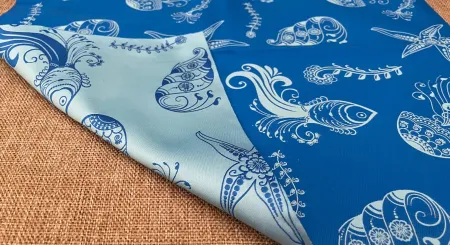
Digital printing is currently the most used and cost-effective technique to customize fabric. In this case, the design or shape to be printed on the cloth is produced digitally and then directly transferred onto the surface to be personalized through specific printers. These printers are often in four-color process, allowing the mixing of the three primary colors—cyan, magenta, and yellow—plus black, recreating any shade. To print on black fabric, white must be added and the fabric treated first to become lighter.
This technique requires suitable technological tools but allows for easy printing of large fabric quantities. The details are vivid and clear, making it suitable for very complex images such as photographs. Additionally, it does not involve additional costs for creating printing plates and offers great versatility.
Screen printing
Screen printing originated as a 100% artisanal process that has developed and evolved over the years while maintaining the original characteristics of the technique. In this case, the design, slogan, or logo is transferred onto the fabric using a frame through a penetration process.
The first step is, therefore, the creation of this frame or printing plate, after which color is transferred one at a time onto the fabric or chosen material. To fix the print, the fabric is then placed in an oven, making the result more durable and water-resistant. It is also important to ensure the print and worktable are clean for optimal results.
Screen printing can be artisanal and done by hand but also industrial. Today, automatic machines exist with a squeegee that presses on the screen surface while it is dragged. This pressure allows the color to be transferred onto the fabric.
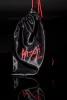
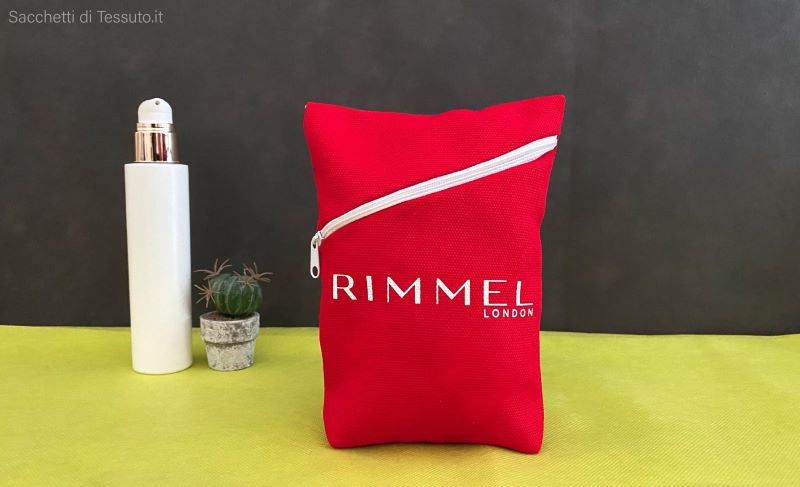
The screen printing process may seem long and complex, but it is one of the fastest techniques ensuring bright and lasting colors. It is the ideal method to reproduce a simple image—like your logo—on large quantities of fabric bags, T-shirts, or canvas shoppers.
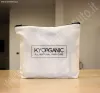
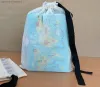
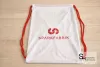
Here’s an example:
Hot foil stamping
The third printing technique you can choose for custom packaging is hot foil stamping or heat transfer printing. Similar to digital printing, it is a direct method that fixes color onto fabric through a combination of pressure and heat, achieved with a specific heat press.
The main difference from other printing methods is that inks are not used; instead, a thin film of a specific plastic material is printed and then transferred onto the chosen fabric, entirely transferring the image. This technique allows, for example, reproduction of special effects such as metallic, mirrored, fluorescent, or glitter finishes.
There are two types of hot foil stamping:
- Hot foil stamping with transfer. The chosen image is first printed on a specific transfer paper and then pressed onto the fabric using the heat press.
- Hot foil stamping with foil. The desired text or logo is screen printed onto a special film, called foil, and then the foil is transferred onto the desired fabric. This method is used to create gold, metallic, or silver logos or texts.
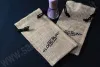
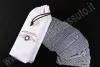
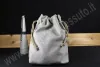
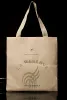
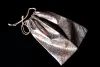
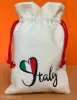
Here is an example of a fabric bag in pure linen customized with hot foil stamping:
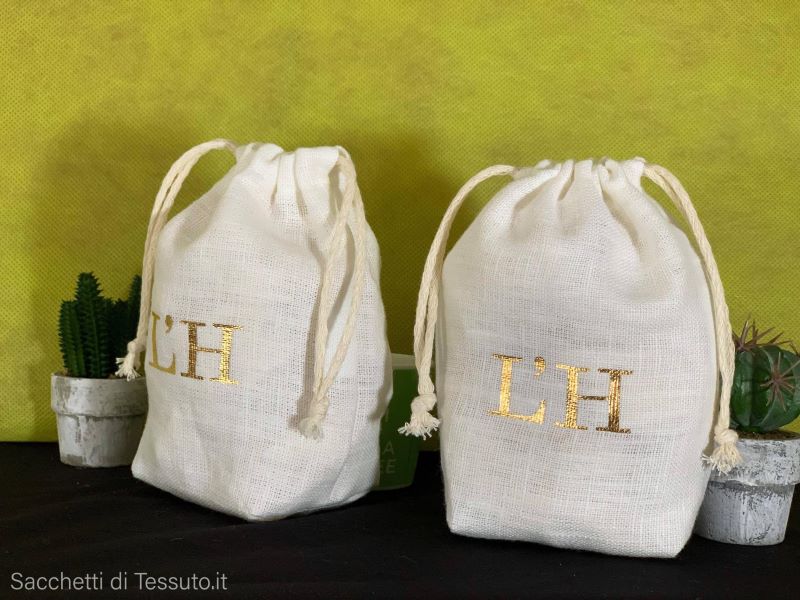
Hot foil stamping has several advantages: it suits different fabric types, including synthetics, is durable, very precise, allows replication of complex images, and is more economical than screen printing if applied to small runs.
Custom packaging. An alternative to printing? Embroidery
Printing offers many options for creating your custom packaging, but for more refined results, Sacchetti di Tessuto can also offer an alternative that will make your packaging unique: embroidery.
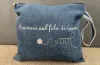
In this case, it is possible to sew directly onto the fabric, in your preferred colors, a slogan, logo, or design. Embroidery is durable and, if cared for, can also be ironed. Above all, it gives the bag an elegant and precious appearance. It is the ideal technique to customize small quantities of packaging for a special occasion or a memorable gift.
There are many options to create your custom packaging, and Sacchetti di Tessuto specializes in producing 100% Made in Italy fabric packaging, adaptable to your product and company. If you want to discover what we can do for you, browse our catalog! You will find many solutions in various materials and made using all the available printing techniques.