









































In questo articolo
Environmental protection is a requirement that can no longer be missing in companies' business operations. Over recent decades, numerous international agreements have been promoted to limit the environmental impact of our economic and productive system, but the results have often been uncertain or too weak. The existence of an increasingly widespread awareness among ecological consumers towards products, packaging, and production processes that are ecologically correct is now undeniable. This is why more and more companies across different sectors implement various Green Marketing strategies to become more sustainable and demonstrate their commitment to their customers.
Thanks to technological progress combined with greater environmental awareness, today companies have several ways to produce and promote products, services, and activities with low environmental and social impact.
Let’s take a closer look at who the ecological consumer is and what companies can do to win them over.
Who is the ecological consumer
The term ecological consumer refers to those who purchase ecological, sustainable, and organic products. This represents a very specific and well-informed target who, before purchasing, thoroughly researches the origin of ingredients, the company that sells/produces them, and the production methods.
This type of consumer has existed for many years. Initially considered somewhat of a nonconformist figure, perhaps a little “strange” — a bit of a hippy if we want to outline early stereotypes — over time the ecological consumer has gained increasing importance.
The category of those buying sustainable products has expanded significantly, and the spread of this phenomenon has grown alongside increasing awareness of environmental issues linked to consumption.
However, as noted by Focus, even though today millions of conscious consumers demand more sustainable products and services, relatively few (around 50%) are truly willing to spend extra and make sacrifices to have products that can genuinely be defined as ecological.
Purchasing behavior: what do Italians think about eco products?
Research on consumer purchasing behavior shows that the ecological trend continues to grow. In this regard, the results of the third EcoLucart Research — a well-known brand that produces paper and other Tissue sector products with Ecolabel certification — conducted by Astra/Demoskopea on a sample of 1,000 representative Italians aged 14 to 79 years are significant. The research investigated what Italian consumers and large-scale retail trade (GDO) think about ecological products.
The survey revealed that almost all respondents (97.4%) demand stricter laws and more thorough controls from institutions. Furthermore, 92.4% believe that “many packages and many everyday products are still too polluting and harmful to the environment.”
89.6% of respondents state they are “willing to personally commit” to caring for the environment by purchasing ecological products, with 54.2% saying they buy them regularly, while only a small percentage (1.8%) do not use them because “they are scarcely available at the stores they usually visit.”
36.7% of respondents say that ecological products are “clearly visible and well labeled on shelves,” while 56.7% consider “finding the ecological product at the usual shopping location” to be decisive in the purchasing decision.
Regarding the factors affecting the decision to purchase ecological products, quality ranks among the top: 87.4% state they are not willing to accept a lower quality level than a normal product, and indeed 46.9% are willing to pay the same price or, for 34.2%, a higher price.
95.3% of Italians think that “in the future supermarkets and hypermarkets will have to adapt by offering truly ecological products” and that the actual ecological nature of products “is always certified by serious and authoritative external certifications” (95.7%).
Purchasing behavior in Europe
The most recent study by IBM and Morning Consult — the European Food Responsibility Study of 2019 — also yielded encouraging results. The study involved samples from Italy, Spain, and the United Kingdom to assess the level of knowledge, habits, and sensitivity of European consumers regarding environmental and food issues.
Here are the results from the Italian sample:
- 78% of consumers showed sensitivity towards environmental sustainability in the purchase choices of essential food products during Christmas and holidays
- 88% of Italians pay greater attention to the provenance of food, especially regarding ethical and responsible origins
- 63% do not mind price increases if these indicate responsible origins of the food
- 75% of Italian respondents care about food waste issues
- 36% consider the health benefits of the products they purchase
- 23% want to contribute to animal welfare

Techniques to win over an ecological consumer
“What is an ecological product?” Respondents in a study conducted by Dr. Fabio Iraldo of IEFE-Bocconi — aimed at understanding the large-scale retail trade’s attitude towards ecological products — answered almost unanimously: the definition of an ecological product refers to its life cycle.
Design, production, packaging, use, and disposal: each phase of the product’s life can be optimized and made more sustainable.
In light of what the various studies and interviews report, you might be wondering what a company aiming to win over the ecological consumer should do.
We have identified 3+1 ways to do so.
1. Make your company plastic-free
Plastic is one of the most polluting materials currently, which is why many companies and consumers hope for a “plastic-free” future.
But how to eliminate plastic from your company?
Alternative materials exist, are numerous, and economically accessible. Of course, it depends on the sector, but in general, you can eliminate plastic from the production process, from packaging, and from the product itself by using fabric, paper, cork, and other recyclable materials: fabric packaging, bioplastics instead of plastic in product composition, and company gadgets in wood or cork… the alternatives increase every day.
As we have often reminded on our blog, to be as plastic-free as possible you can eliminate single-use plastic from offices: stop using plastic cups, plates, and cutlery and welcome reusable water bottles and glass cups, recyclable food containers, and lunch bags and fabric bags.
If it is not possible to eliminate plastic entirely, you can choose recycled plastic and introduce separate waste collection in offices.
2. Fabric shopper bags for more sustainable packaging
Packaging is a very important part of the product. Companies spend a lot of time and resources creating the perfect packaging for their products, which often requires large quantities of plastic and ecologically unfriendly production processes.
An alternative is fabric packaging!
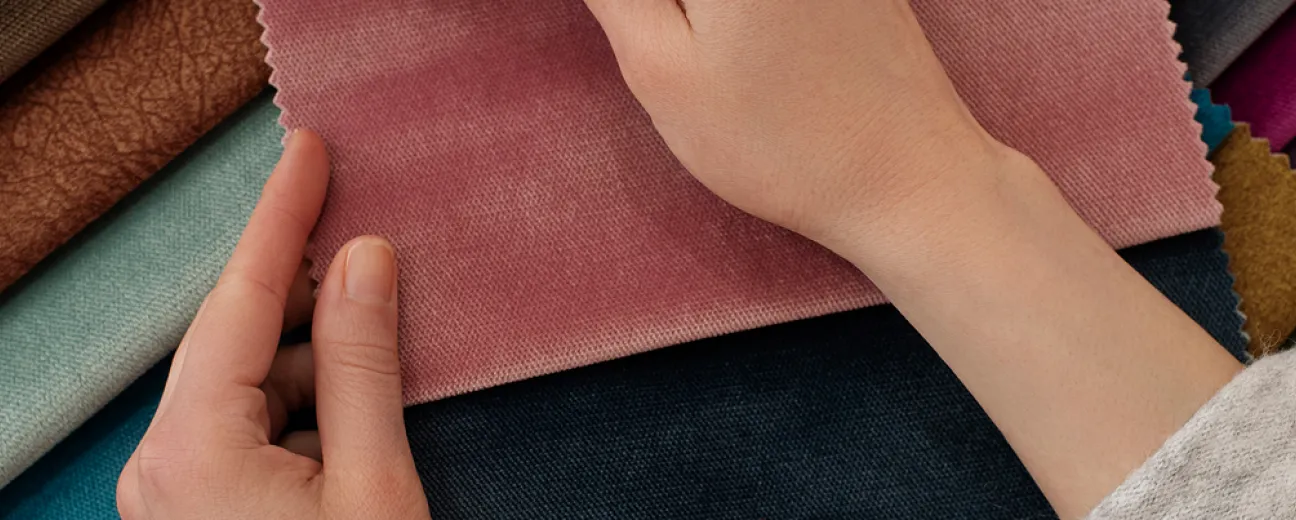
Hemp, jute, linen, cotton: there are many ecological fabrics — some certified OEKO-TEX — capable of increasing the perceived value of the product and communicating your brand’s values.
The materials are durable and versatile, and any sector can find the right bag for its products: from cosmetics to luxury, from food to organic.
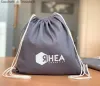
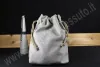
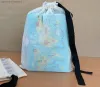
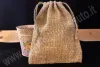
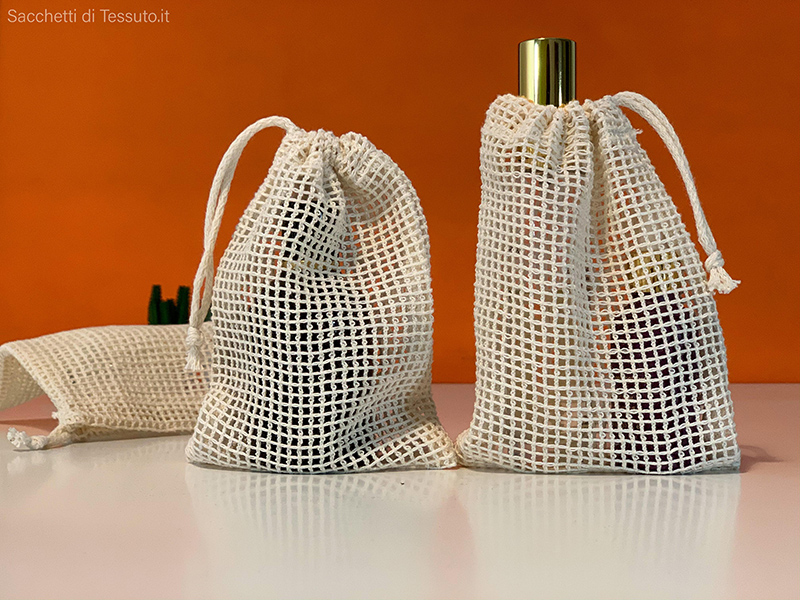
The fabric shopper bags in organic cotton are the most used and convenient format to contain and carry any type of product, but alternatives are numerous and customizable: clutches, covers, tote bags, travel cases, drawstring bags, candy-style closures…
3. Choice of materials and semi-finished products with low ecological impact
The pollution problem is not caused by plastic alone but also by CO2 emissions. A sustainable company must therefore choose alternative materials that require low energy consumption for processing, discharge no pollutants into surrounding water, and produce low CO2 emissions.
Wood, bio-plastics and recycled plastic, paper, fabric, bamboo, wheat straw, cork, and many more! There are many alternatives to plastic. These are durable and more sustainable solutions, and depending on the sector and type of product, you can find the most suitable alternative material to replace plastic.
4. Lower CO2 emissions and energy consumption
The solutions mentioned above serve as a springboard to reduce CO2 emissions and energy consumption, but there are many other ways to improve the situation.
In fact, to reduce CO2 emissions, with some investment, it is possible to install thermal insulation for the company and production facilities to limit heat loss and excessive use of air conditioning. To decrease energy consumption you can encourage Smart Working and car sharing, which will also help reduce air pollution.
4+1. Last but not least: choose suppliers who truly care about the environment
And the choice is demonstrated by actions. At Sacchetti di Tessuto, for example, we have for years decided to produce packaging in ecological and sustainable fabric. We select and test new materials to offer you an elegant, robust, and environmentally respectful product.
We can advise and help you have ecological, customised, and 100% Made in Italy packaging for your products.
Take a look at our catalogue!