






























In questo articolo
The bag has always been considered an essential accessory for every woman, not only to hold fundamental everyday items – wallet, mobile phone, keys, makeup, tissues, and much more – but also to keep up with fashion.
There are many variations of bags to express one’s own style; in fact, the bag can be considered a status symbol that reflects a woman’s personality and instills confidence and self-esteem.
But it has not always been this way. The first bags were men’s accessories. Men used them, initially to hold tools, then as coin purses, and only in recent times did bags make a major transition: from work tools to fashion accessories. And the evolution of an accessory like the bag does not end here, because thanks to the variety of materials and customisations, it can adapt to every need and personality, so much so that today it would be limiting to imagine it as a “must-have” only in the female wardrobe. In fact, as in ancient times, more and more often men’s lines with bags are designed and developed, functional, practical and, naturally, also stylish.
Let’s explore the history of the bag!
Bag: the accessory always present since antiquity
The earliest rudimentary forms of bags date back thousands of years. Some artifacts have allowed us to reconstruct how prehistoric men used them: they devised a simple system for folding animal skins with the aim of transporting weapons and tools.
Later, with the spread of currency and the consequent need to carry it, our ancestors began to make leather bags. It is no coincidence that the etymology of the word "bag" takes us to Ancient Greece, where the term byrsa referred to leather. The artisans of the poleis had thus started to craft leather notebooks or small bags to carry some coins and small precious items for their trade exchanges. The convenience of these pouches was such that the custom spread and these were precisely the first men’s bags in history.
The story linking the byrsa of the Ancient Greeks with the iconic models of the great fashion houses of the twentieth century is long and also passes through Italy. It is in twelfth-century Tuscany that we find the earliest evidence of leatherworking with which scarselle, bags worn hanging from the neck and belts, and bisacce, travel bags that could also be placed on the back of horses, were created. In the Middle Ages, more comfortable shoulder and crossbody models began to spread, such as game bags and bandoliers, especially among peasants who needed to keep their hands free for work.
However, it was only from the Renaissance onward that bags began to be considered predominantly female accessories linked to fashion. The models became more elaborate and the materials used to make them increasingly valuable: not only leather, but velvet, brocades, satin, bows, ribbons and precious stones for decorations.
When did women replace men as the primary bag users?
With the rise of the bourgeoisie between the nineteenth and twentieth centuries, and women’s growing desire for independence, the bag became a strong symbol of female emancipation, combined with its usefulness as a professional accessory to carry many essential items.
At the end of the nineteenth century, for example, the first shoulder bags for strolling, with chains or rigid handles appeared. Thus, the bag was no longer just a whim or a professional accessory, but also an everyday object, as women began to travel more frequently. When travelling, they no longer settled for men’s trunks and suitcases. They wanted fashionable luggage with refined and more feminine details.
It is in this sensitive historical phase that the bag definitively became a fashion accessory and, therefore, more attention was paid to the choice of fabrics and finishes, colours and shapes. But we must wait until the twentieth century to witness the appearance of bags as we know them today.
The twentieth century, the century of iconic bags
The establishment of the bag as an indispensable element in the female outfit is credited to Coco Chanel. It was 1926 when the iconic French designer not only introduced and immortalised the petit robe noir, the little black dress, but paired it with a bag defining what has been – and still is – the model of elegance.
The twentieth century is the era of bags that made history. Some examples? The crocodile leather trousse or the black quilted diamond-patterned clutch also by Chanel, remembered by her name. Or the first bucket bag designed and offered by Hermés, or the horse-riding-inspired bag by Gucci.
No Hollywood diva of the postwar period was unaware of the power of choosing the right bag. The Kelly bag by Hermés, for example, is a rigid bag with a lock designed and made by the fashion house for Grace Kelly, who wore it in 1956.
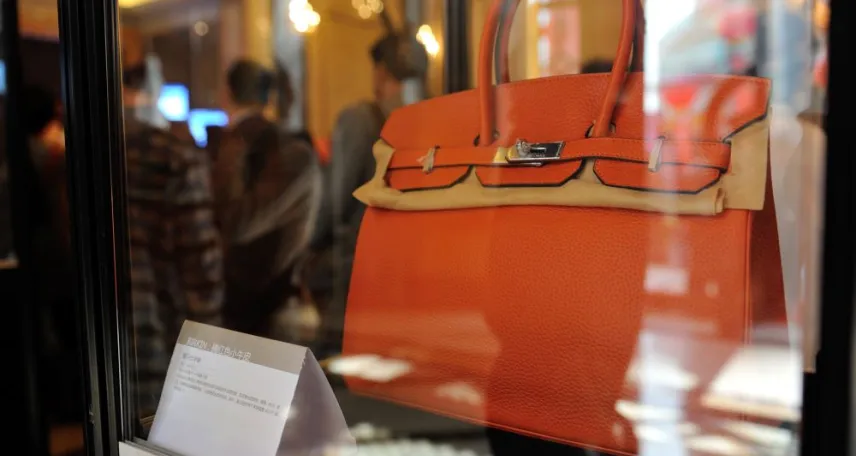
Jacqueline Kennedy was the muse for Gucci in creating the Jackie 1961, the quintessential hobo bag. Another diva, Jane Birkin, inspired the creation of the bag that still bears her name and remains on the wish list of enthusiasts worldwide. It is said that in 1984, the English actress was on a Paris-London flight behind Jean-Louis Dumas, president of Hermés, complaining about how hard it was to find a bag suitable for her needs as a young mother: elegant and practical, trendy and spacious. Et voilà, and just like that the Birkin was born!
The passion for the bag as an accessory, but also as a status symbol, is certainly not just a matter of the past. Alessandro Michele, creative director of Gucci, has reinterpreted the Jackie 1961, and many other designers have created much-loved bags and new icons. Examples include the Miss Sicily by Dolce&Gabbana, the Galleria by Prada, and the Trio by Cèline.
Over the centuries, shapes, materials and styles have changed, but all evidence suggests that the next chapter in the story of the bag is yet to be written.
The alternative to the bag? Fabric bags
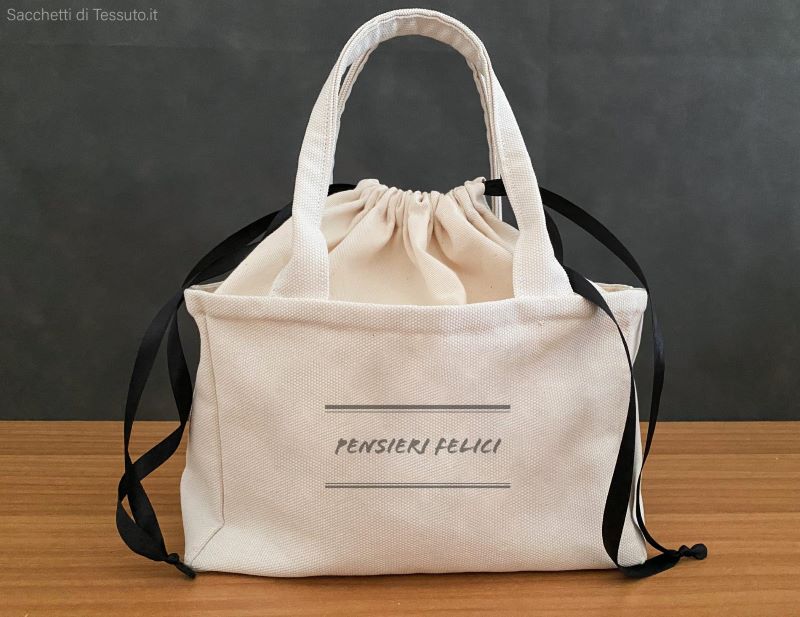
We have talked about the history of the bag through the models that marked and influenced its evolution, but we must not forget that, starting from the second half of the twentieth century, the bag became an accessory for everyone. Practicality and functionality to carry wallet, glasses, house keys and everything we are now used to having with us led artisans and companies to invest in different materials and production methods that allow the creation of affordable items.
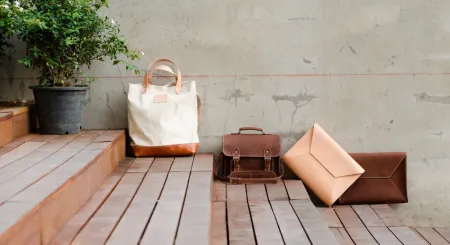
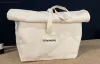
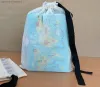
Today there is a great variety. On the market, we find cotton fabric clutches, rigid bags, duffel bags, briefcases and backpacks in natural cotton, practical bags with many pockets – the possibilities today are endless, as are the materials they are made from, such as plastic, leather, straw and fabric.
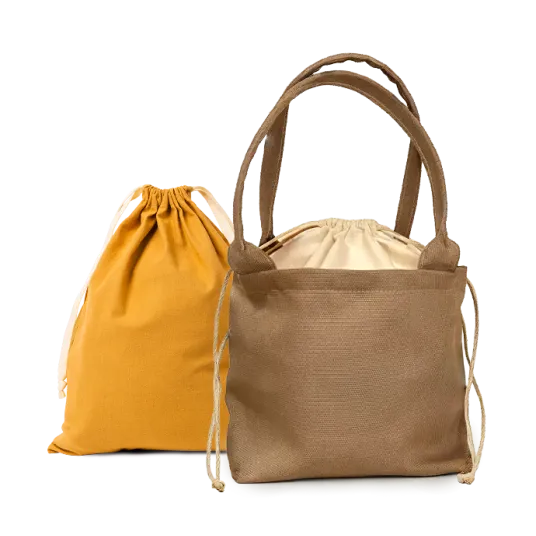
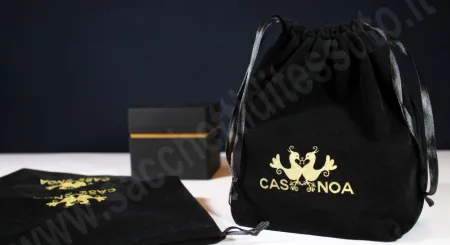
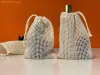
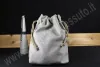
A variant of the bag, fashionable in recent years among those seeking a simple, comfortable and easy-to-wash accessory, is the fabric bag: a comfortable and customisable pouch. Used in many alternative ways not only as a container, the fabric bag can serve as a handbag or be used as an accessory for a bag to keep objects organised.
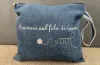
Fabric packaging has indeed developed greatly in recent years, and on the market it is possible to find raw cotton clutches, bags to store jewellery, coin pouches and makeup pouches that can be conveniently placed inside bags to avoid clutter.
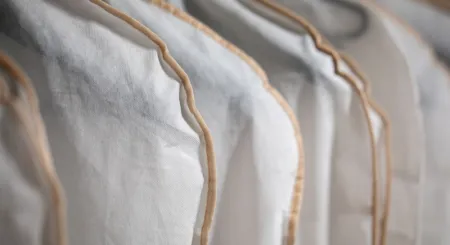
A versatile accessory, so much so that among accessory manufacturers, the dust bag has spread: a fabric bag that covers bags, to present them better in stores, store them more carefully at home and thus increase the perceived value of the product.
Also useful for protecting them from dust and abrasions, the dust bag is a bag with a lifespan well beyond the purchase, as it can be used as protective packaging to store the bag in the wardrobe.
If you want to discover some of the alternatives, uses and materials to create custom bags and fabric bags, you only need to browse our online catalogue!